
Packaging Procurement · 2026-11-16
Water-Based Flexo Ink on Kraft Paper: Why Isn't a Color Match Enough?
A color match on a drawdown does not show how the ink behaves at production speed. Compare two ink systems on the same kraft lot before approving the change.
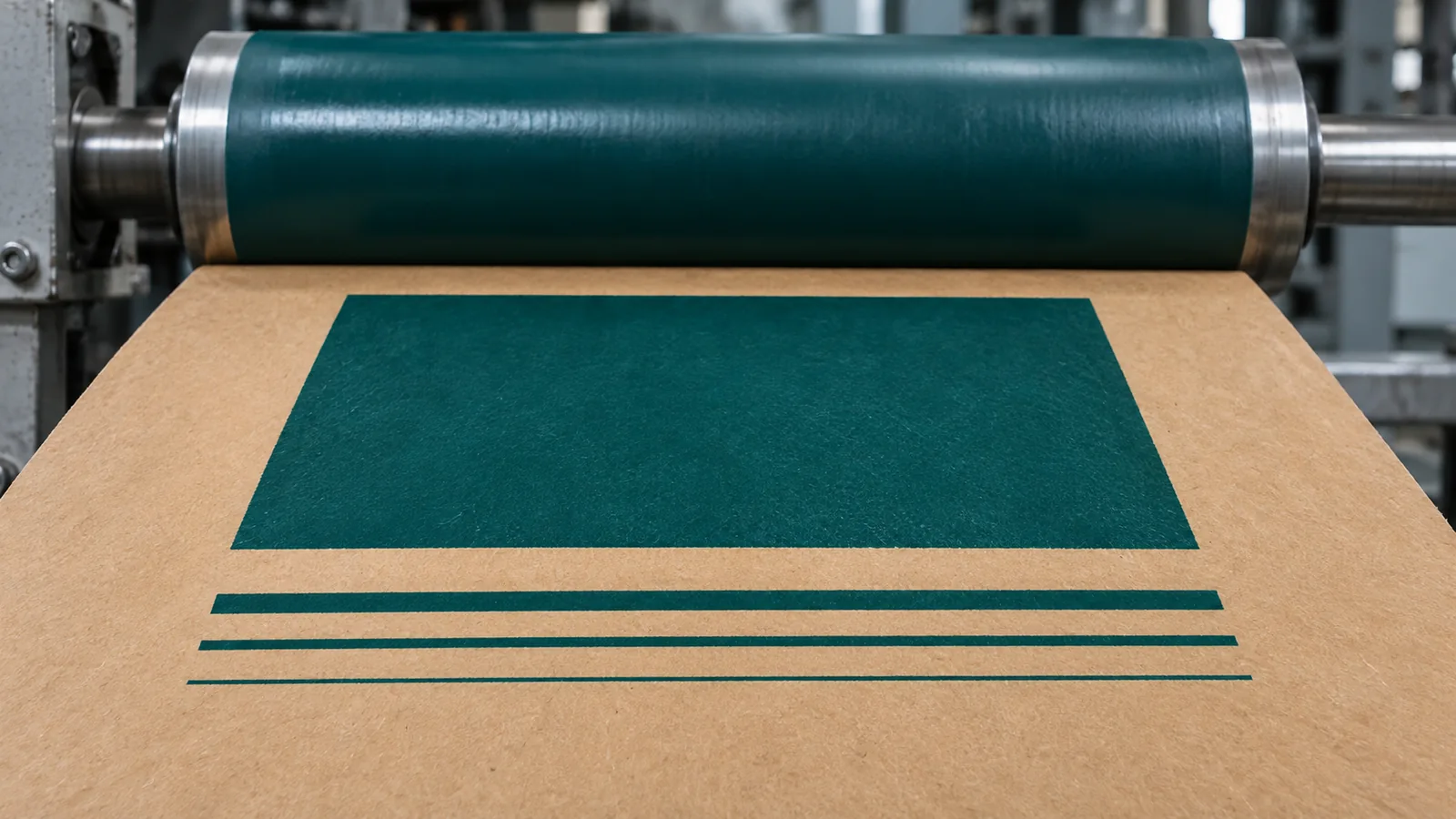
Two ink systems can produce a similar shade on a kraft paper drawdown and still behave differently when the press reaches production speed. One can transfer to the back of the web when rewound or scuff during bag making. The material to approve is the combination of ink, paper and production settings, not the swatch alone.
The question is timely: Siegwerk announced on 12 November that its acrylic-free extender for water-based flexo ink on paper and board won the Research & Development category of the Sustainability Awards. The company reported lower drying energy in initial industrial trials. That result is specific to its comparison, not a projected saving for your line. An extender is a component of the ink system; the award does not qualify a finished ink, paper grade or package for a particular job.
Change the ink first, not the ink and paper together
Use the current ink on a representative production lot as your control. Run the proposed ink on the same kraft paper lot and print side, preferably with adjacent material from the same roll. Hold artwork, plate and anilox specification constant for the first comparison. Record the plain paper shade as well as the printed shade: on brown kraft, a paper color change can shift the appearance of the same ink. If paper is also being changed, test it in a separate comparison before approving the combined change.
Use a common baseline to isolate differences, then let the ink and press teams tune each system within its recommended operating range. Record the actual viscosity, pH, ink temperature, web speed and dryer settings rather than forcing both inks to run at identical values. The ink manufacturer's troubleshooting guide illustrates why a surface defect can have several causes. Confirm the root cause on the press before changing the paper specification.
Compare the sample from the roll with the sample from the bag
Agree acceptance criteria before the first trial. Include a dense ink area, fine detail and a printed area that will be handled or folded. Keep samples at startup and after the press stabilizes at the intended speed.
- At the press: compare the solid patch, detail and uniformity under agreed lighting or instrument conditions. Check both the printed face and the back of the web for transfer after the agreed rewind or stack dwell.
- After conditioning: check rub resistance and visible ink transfer. If using a lab method such as ASTM D5264, record the agreed load, cycles, contact material and pass criteria. The method does not supply a universal acceptance level for packaging.
- After converting: make the actual bag or wrap. Inspect scuffing at folds and contact points, and confirm that the printed areas do not interfere with gluing or other operations where relevant. A proof that was never rewound or converted cannot replace this check.
Compare energy and cost per accepted run
Compare the two systems at the same product requirements and a documented production rate. If the press can meter dryer energy, log consumption for a defined run and divide by the accepted printed area or by accepted bags. Count setup waste, rejected output, added drying time and any change in ink use. A lower dryer reading is not a useful saving if the press had to slow down or more material was rejected. For environmental claims beyond press energy, request evidence with a defined scope for the specific construction rather than extrapolating from an ink award.
What to include when requesting kraft samples
Share the current paper grade and shade, print side, grammage, roll width, ink system, press and dryer type, typical line speed, artwork coverage and finished packaging use. Ask for a representative sample and state how you will compare it with the control. See our packaging and printing applications or send the substrate specification to YOUNGSUN PAPER. We can discuss the paper grade and samples available for your job; the converter and ink provider should validate the production combination.
Frequently asked questions
Can I approve a water-based flexo ink from a drawdown alone?
Use the drawdown as an initial color screen. Drying at speed, ink transfer after rewinding, rub resistance and performance after converting require a representative trial.
Should a comparison use identical pH and viscosity for both inks?
Not necessarily. Start with a consistent comparison and document the settings; run each formulation within the operating range recommended by its supplier.
Does an acrylic-free extender prove the finished kraft package is recyclable?
No. It describes the extender formulation. Claims about the finished package need evidence for the complete construction and the relevant market or recycling system.