
Packaging Procurement · 2026-11-26
Paper Void Fill: What the Dispenser Speed Leaves Out
A fast dispenser does not make every kraft paper a suitable refill. Use an equipment-specific material brief and a packing-station trial to separate paper output from parcels ready to ship.
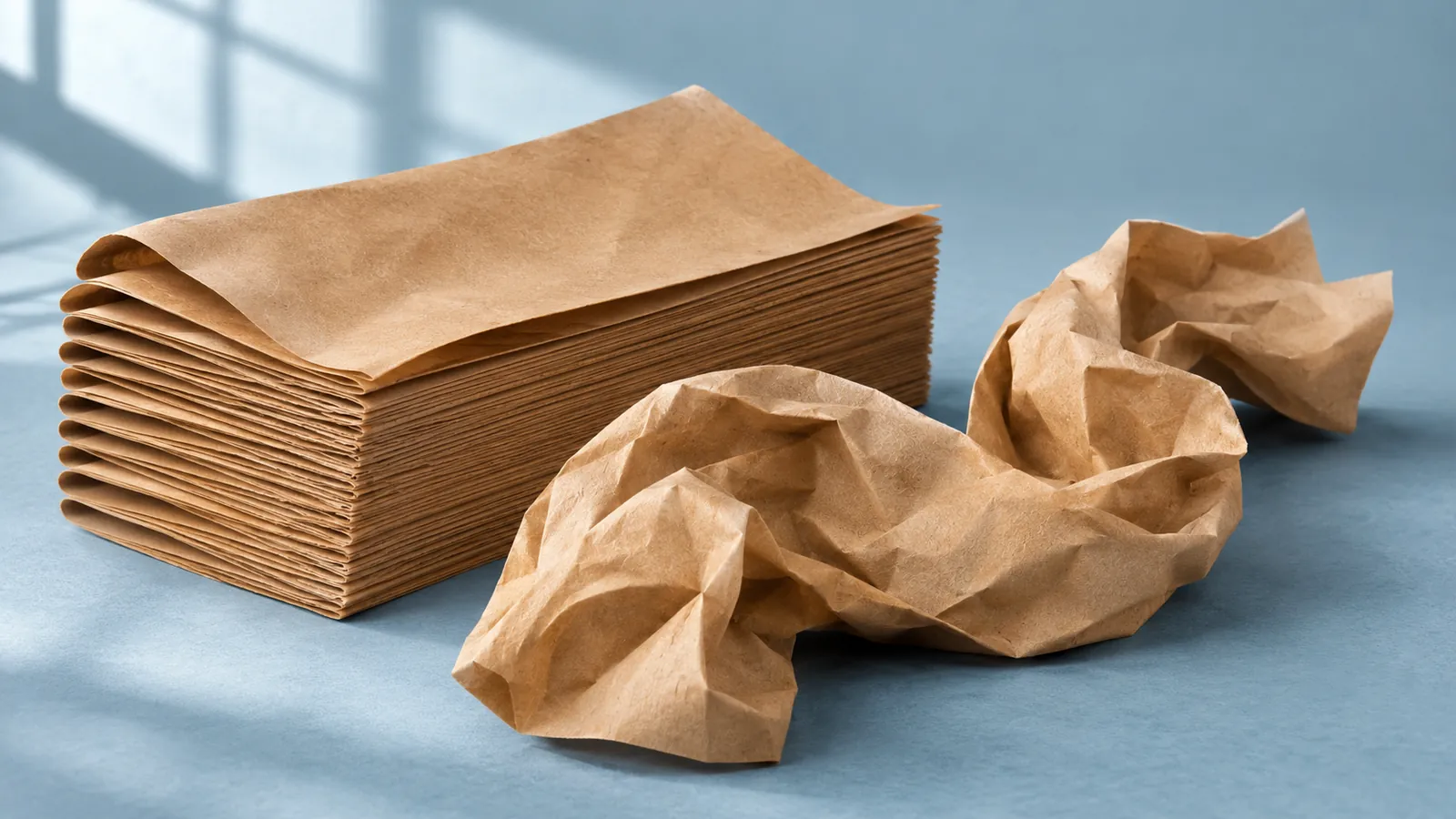
Buy paper void fill against an approved equipment-and-package specification, not a GSM and a headline speed. The useful commercial result is accepted parcels ready to ship, with the agreed protection and material use. Metres of paper leaving a dispenser measure only one part of that process.
The question is timely. Packaging Europe reported Orkka's LockedPaper V3 launch on 25 November 2026, describing a system that forms flat fanfold kraft paper into void fill, with advertised output up to 80 metres per minute. That is a reported equipment rating, not a result measured by YOUNGSUN PAPER or a promise about a customer's packing line.
Our focus is the purchasing decision behind this news: what exactly must a paper supplier deliver, and what must the packing operation approve? This is an independent procurement framework, not an offer of Orkka equipment or certified replacement consumables.
Specify the refill, not just the paper grade
Fanfold describes paper supplied in a continuous, alternating-fold stack. It is a delivery format, not a complete performance specification. A brown colour and matching grammage do not establish that a refill will load, feed, form and cut correctly in a particular dispenser.
Equipment suppliers publish system-specific material descriptions. For example, SEALED AIR's FasFil 1500 page identifies 15-inch fanfold paper, while its FasFil Jr. technical sheet specifies use with its branded fanfold material. These are examples of defined system inputs, not interchangeable specifications for every machine.
Start with the equipment maker's current consumable requirements and any restrictions in the service or supply agreement. Obtain written confirmation before proposing an alternative. Then separate three possible purchases: base kraft paper, converted fanfold bundles, and a consumable approved for the named system. A quote for the first is not automatically an offer of the third.
Put these six fields in the material brief
The following is our suggested RFQ checklist, not a universal machine standard. Ask the equipment supplier which fields and tolerances apply before setting acceptance limits.
| Field | What the buyer should identify | Evidence to obtain |
|---|---|---|
| Equipment reference | Maker, exact model, configuration and operating mode | Current consumable specification and approval route |
| Paper construction | Grade reference, GSM, number of plies and declared fibre composition | Supplier data linked to an identifiable material revision |
| Converted format | Width, fold pitch, bundle dimensions and perforations if relevant | Drawing or format sheet accepted for that equipment |
| Usable supply | Declared length or net paper mass, joins and their permitted form | Agreed delivery basis and incoming inspection method |
| Handling conditions | Packing protection, storage and conditioning before use | Conditions agreed by the paper, converting and equipment teams |
| Change control | Changes requiring review, including grade or converting changes | Batch identification, retained reference and reapproval responsibility |
Do not copy a dimension from a news story into an RFQ for another model. Likewise, ask what a supplier means by recycled content or certified material and which documents apply to the proposed delivery. A general company statement is not a batch-specific material description.
Do not confuse empty-space filling with cushioning approval
First define the job. Is the paper filling residual space around a stable item, cushioning a fragile product, or restraining a load? Write down product mass, geometry, vulnerability, carton size and the distribution route. Do not treat those three functions as equivalent merely because all can involve formed paper.
Agree the finished-package evaluation with the responsible packaging team. Inspect the pack after the relevant handling and distribution checks, against limits chosen for that product. Neither a compact paper shape nor a dispenser's maximum feed rate establishes product protection on its own. This article does not prescribe a universal drop height, compression limit or amount of paper per box.
For carton dimensions and material use, see our separate guide to right-sized e-commerce packaging. That decision complements the refill trial; it does not replace it.
Trial the whole station, including the interruptions
Use the currently accepted material as a reference where available. Keep the order mix, package requirements and operator instructions comparable. Agree the trial duration and sample plan before running a candidate; one clean cut or a short demonstration is not a production approval.
Record startup, normal feeding, cut-length selection, start-stop operation and bundle changes. Where the equipment supplier permits joined bundles or another replenishment method, include that approved method. Record incomplete feeds, unwanted tearing, cut or forming problems, rejects and the time spent correcting them. Operators must follow the machine's safety instructions; never clear a jam by bypassing guards.
Track both material output and the station's result: parcels completed to the agreed pack specification, usable paper consumed, waste and interruptions. Note whether delays came from paper feeding, product placement, carton closing or another task. A faster paper feed will not necessarily remove a bottleneck somewhere else.
Compare cost per accepted parcel on a consistent basis
A price per tonne is useful for buying base paper. A price per bundle is useful only when the usable contents and format are defined. Neither alone establishes the cost of packing an accepted order.
For the trial, choose a clear cost boundary. Add paper consumed, attributable labour or stoppage cost, and rejected or reworked packs included in that boundary; divide by the number of accepted parcels. Avoid double-counting waste already included in consumed paper. Keep equipment rental, maintenance and freight either included in every option or shown separately.
Use measured results rather than a guessed saving. A lower bundle price may buy a different usable length, a different material, or more replenishment work. Conversely, a more expensive paper is not automatically justified by a faster demonstration. Require the same acceptance decision from both options.
Prepare an import inquiry that can be answered
For a buyer in Mexico, Colombia, Chile or another destination, identify whether the shipment will be base reels or converted refills, who performs converting, and who approves equipment compatibility. Include destination, intended volume, packing format and the required documents. Confirm local service and consumable availability with the equipment provider rather than assuming an imported paper order includes machine support.
Send YOUNGSUN PAPER the base-paper specification, required width and GSM, intended converting route, quantity and destination. Review our kraft paper range, processing information and packaging and printing applications, or send a kraft material inquiry. Availability of a particular converted format, third-party machine approval and any specialist protection claim must be confirmed separately; they are not promised by this article.
Frequently asked questions
Can any kraft paper of the same GSM replace a fanfold refill?
No. GSM alone does not identify the format, construction or equipment approval. Obtain the current machine requirements and evaluate a proposed alternative through the equipment supplier's permitted approval route.
Does a dispenser's metres-per-minute rating predict parcels per hour?
Not by itself. Packing also includes product placement, paper handling, replenishment and closing. Measure accepted parcels over an agreed trial period with a representative order mix.
Is paper void fill enough for a fragile product?
Not automatically. Define whether the package needs space filling, cushioning or restraint, then evaluate the complete pack against product-specific acceptance criteria chosen by the responsible technical team.
Does YOUNGSUN PAPER supply refills certified for Orkka or SEALED AIR?
This guide makes no such claim and implies no affiliation. Ask about the precise material and converting scope you need; compatibility with a named machine requires separate confirmation.