
Packaging & Procurement · 2026-10-24
A Smaller Shipping Box Saves Paper—What Happens to Product Protection?
Right-sizing is gaining attention in e-commerce packaging. The useful purchasing question is whether the complete pack can use less material while still arriving intact—not simply whether a smaller carton is available.
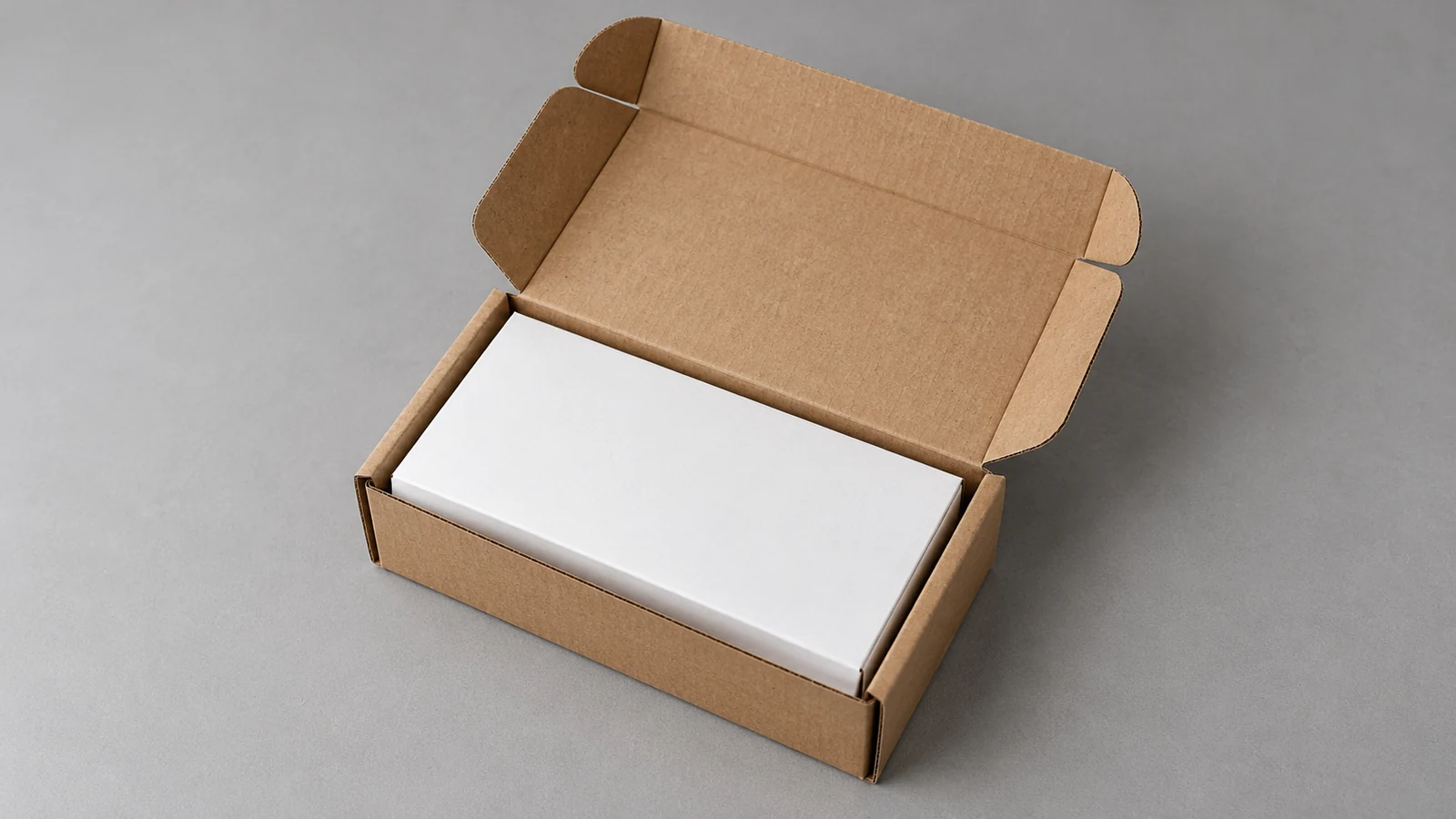
Right-sized e-commerce packaging means designing the shipping structure around the actual product and its distribution route. It can reduce unnecessary space, but it also changes how the product is restrained, how loads travel through the pack and how closures work. The material decision should follow those functions.
In an industry report published on 21 October 2026, Packaging Insights describes growing attention to right-sized, shipping-ready formats and to the interaction between materials, adhesives, automation and returns. That is a timely market signal, not evidence that every smaller package will cost less or perform better.
For a paper buyer, the next step is a controlled comparison: the current packed product versus a proposed smaller structure, using the same acceptance criteria.
Start with the product and the route
Before changing GSM, board grade or dimensions, record product weight, dimensions, fragile areas, surface-finish sensitivity and permitted movement. Then map the real route: warehouse packing, parcel sorting, vehicle transport, last-mile delivery and any expected return journey.
A flat textile item and a glass container may fit into equally sized mailers but require very different protection. Likewise, a rigid presentation box may protect appearance in a retail setting without being a qualified shipping container.
The ISTA test-procedure directory distinguishes parcel-delivery testing from retailer-fulfilment and other distribution environments. Ask the responsible testing laboratory to select the current procedure for the actual product and route. Do not choose a protocol only because its name appears on another supplier's website.
Give each paper layer a clear job
| Layer or component | Main job | What to check |
|---|---|---|
| Outer mailer or shipping box | Carry handling loads and maintain closure | Board construction, compression behaviour, seams and closure after conditioning |
| Insert or retaining structure | Limit movement and separate vulnerable surfaces | Fit, contact points, displacement and abrasion after transport testing |
| Wrap or interleaf | Reduce rubbing or separate components | Surface compatibility, lint, colour transfer and the amount actually needed |
| Presentation carton | Carry graphics and support the retail or unboxing experience | Print, crease, surface damage and compatibility with the shipping design |
Kraft paper may serve wrapping, interleaving or converting functions according to grade. Grey board can provide structure in rigid presentation boxes or inserts. Folding box board provides a different route for folding cartons. These names describe material families; they do not make the grades interchangeable or establish transport performance.
An existing retail box should only become a shipping-ready pack after the complete product-and-package system has been validated.
A closer fit changes the protection mechanism
Removing empty space can reduce uncontrolled movement. It can also remove room previously used for cushioning. A product pressed against an outer wall may receive a different shock load from the same product held away from that wall by a retaining insert.
Therefore, draw the load path. Identify which surfaces touch the product, which folds flex and which corners carry pressure. For a premium printed carton, assess scuffing as well as breakage. A delivered product can remain functional while its presentation packaging becomes commercially unacceptable.
Do not use a heavier paper as the default answer to every failure. The cause may be geometry, restraint, an adhesive bond, moisture exposure or packing variation. Change one variable at a time during trials so the result remains interpretable.
Compare the cost per successful delivery
Paper price per tonne is only one input. For an internal trial, use a consistent calculation:
Cost per successful delivery = (packaging material + packing labour + freight + expected damage and return costs) / successful deliveries.
Use the same currency, period and cost definitions for both designs. Avoid double counting replacement freight or returns that are unrelated to packaging. A small pilot can reveal failure mechanisms, but it does not by itself establish a stable damage rate.
Record actual paper and board consumption per packed order, external dimensions, packing time, rejects and delivered-product condition. If the carrier charges by dimensional weight, confirm its current divisor, rounding and service rules directly. A smaller measured box does not guarantee a lower invoice when rate bands or contractual terms remain unchanged.
Specify closures and return use separately
Review tape, adhesive, tear strip and locking geometry as part of the structure. A seal that works on one coated face may need different conditions on another surface. Validate the closed pack after the expected storage and transit conditioning, rather than relying only on an immediate hand pull.
If returns are part of the design, define what the consumer is expected to do: reuse a second adhesive strip, refold a tab or add new tape. Check opening damage, instructions and reclosure with representative users. Do not describe a package as reusable on the basis of a second closure alone; the required number of journeys and condition limits should be defined and tested.
Use a trial brief that suppliers can quote consistently
Send the converter and material supplier the following information:
- Product dimensions, weight, surface sensitivity and vulnerable features.
- Current shipping structure and the proposed internal and external dimensions.
- Paper or board role, target GSM or caliper, grain direction where relevant and tolerances.
- Printing, coating, adhesive, forming and packing process.
- Destination route, expected storage conditions and return-use requirement.
- Product-damage and packaging-appearance acceptance criteria.
- Trial quantity, test plan, responsible approver and production-change rule.
The ISTA 3L overview explains the need to define acceptable product damage and package degradation before testing. That discipline is useful even when a laboratory selects another procedure. A generic statement such as “passed a drop test” leaves too much uncertainty about the product, conditioning, sequence and acceptance criteria.
What YOUNGSUN PAPER can support
YOUNGSUN PAPER can help review candidate kraft papers, grey boards and folding box boards for converting trials. Share the function of the paper layer and the intended packaging process so material selection follows the design requirement. Finished-pack transport qualification belongs to the responsible packaging team and testing provider.
Send your drawing and material requirements, or review our packaging and printing applications. Standard samples are free; international courier charges are paid by the customer.
Frequently asked questions
Does right-sizing always reduce total packaging cost?
No. Compare material consumption, packing work, freight and damage-related costs using the same definitions. A smaller package can still require a different insert, closure or process.
Can a grey-board gift box replace a corrugated shipping box?
Only if the complete packed product is validated for the intended distribution route. Presentation stiffness and parcel-network protection are different design requirements.
Is higher GSM enough to prevent shipping damage?
No. Geometry, board construction, restraint, humidity and closure can all influence results. Use material data alongside converted-pack testing rather than treating GSM as a transport rating.
Which transport test should a buyer request?
Give the laboratory the actual route, product, pack type and acceptance criteria. Select the current applicable procedure with the laboratory or customer; different fulfilment and parcel networks can require different evaluations.
What changes require another approval?
Review changes to material grade, construction, dimensions, insert geometry, adhesive, coating, product weight or distribution route. Define the required revalidation before substitutions enter production.