
Paper Market & Procurement · 2026-10-20
A Pulp Benchmark Fell—Why Didn't Your Paper Quote?
A lower pulp benchmark does not flow straight into every finished-paper quote. Buyers need to align the benchmark, fibre recipe, production timing and delivered terms before deciding whether a supplier's price is reasonable.
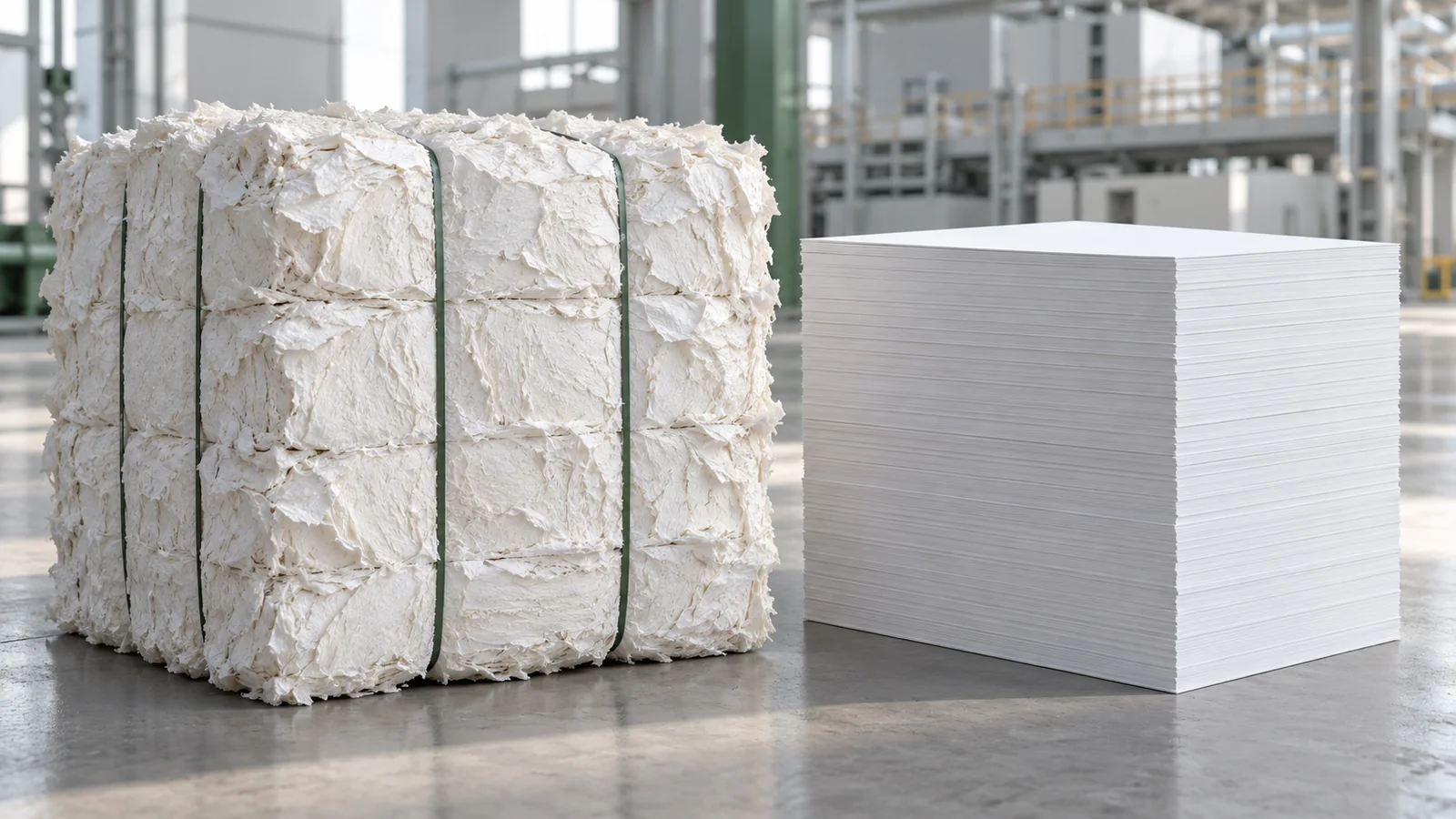
A pulp index moves lower, but the supplier's paper quote barely changes. Is the quotation out of date, or is the buyer comparing two different things?
Both situations are possible. Fastmarkets' pulp market coverage tracks several grades, regions and commercial bases, and its market commentary distinguishes spot indications from gross or contract-related prices. A movement in one series is therefore an important signal, but it is not a finished-paper invoice.
The practical buying question is: how much of that benchmark is relevant to the exact paper grade, production window and delivered terms in your RFQ? This guide provides a repeatable way to find out without relying on a vague explanation from either side.
1. Start With the Exact Benchmark
"Pulp price" is not one universal number. Before comparing it with a paper quote, record:
- fibre type: softwood, hardwood, recycled fibre or another furnish;
- grade and quality definition;
- market and delivery region;
- spot, contract, list or assessed price basis;
- currency and unit;
- publication date and assessment period;
- delivery basis included in the benchmark.
Softwood and hardwood pulp perform different jobs in a furnish. Long softwood fibres are commonly used where strength matters, while hardwood fibres can support formation, smoothness and print surface. Read our introductions to softwood pulp and hardwood pulp before choosing a reference.
The assessment methodology matters as much as the headline. Fastmarkets explains how its forest-product price assessments are formed, including the market information and specifications behind an assessment. If the benchmark and the supplier's grade do not share a comparable basis, the apparent price gap may be meaningless.
2. Map the Benchmark to the Actual Paper Furnish
The pulp exposure of finished paper varies substantially by product.
- Woodfree paper relies heavily on virgin chemical pulp, but surface sizing, fillers, brightness and converting still influence its cost.
- Folding box board combines several plies and may use different fibres in the surface, middle and back layers.
- Kraft paper is purchased for strength as well as appearance, so fibre selection and machine performance cannot be reduced to a generic pulp number.
- Recycled board is more directly exposed to recovered-paper availability and yield than to a virgin-pulp benchmark.
Ask the supplier which input is commercially relevant to the grade. A hardwood benchmark may help explain part of an uncoated paper quote but say much less about a recycled grey board or a heavily coated packaging board.
3. Allow for Inventory and Production Timing
Paper is not always produced from pulp bought at today's market level. A mill may be consuming fibre contracted earlier, holding inventory acquired in another pricing period or scheduling production against an existing cost base.
This creates a lag between a benchmark move and a finished-paper adjustment. The lag is not fixed: it changes with inventory, contract structure, grade, mill schedule, demand and shipment date.
For a fair comparison, ask four dates:
- Which benchmark assessment date are you using?
- When will the paper be produced?
- How long is the quotation valid?
- When will the shipment leave the port or warehouse?
A quote valid for a future production slot should not be compared casually with a single spot-market headline published today.
4. Separate Mill Price From Delivered Cost
Pulp is only one line in the cost stack. The price a buyer pays can also include:
- fillers, coating pigments, binders, sizing agents and barrier chemistry;
- energy, water treatment and machine efficiency;
- coating, calendering, sheeting, rewinding and packing;
- certification, inspection and documentation requirements;
- inland transport, terminal handling and ocean freight;
- exchange-rate movement and financing cost;
- waste allowance for a custom size or specification.
This is why a stable or lower mill price can coexist with a higher CIF total. Conversely, a favourable freight booking or exchange rate can improve the delivered price even when the pulp index is firm.
Always compare the same Incoterm. FOB should be compared with FOB; CIF with CIF to the same destination and shipment period.
5. Make Sure the Two Quotes Describe the Same Paper
A lower number is not necessarily a lower price for the same product. Normalize every quotation before calculating the difference.
| Quote line | What to normalize | Why it matters |
|---|---|---|
| Product | grade, furnish and coating | Similar trade names can hide different constructions |
| Basis weight | GSM and tolerance | A lighter sheet can reduce price and performance |
| Thickness | caliper and bulk | Equal GSM does not guarantee equal stiffness or yield |
| Format | roll/sheet, width, length, core | Converting and trim loss change cost |
| Quantity | tonnes per grade and size | Mill allocation and setup cost depend on the exact mix |
| Quality | brightness, moisture, smoothness, strength | Performance targets affect furnish and processing |
| Compliance | FSC claim and required documents | Certification scope must match the shipment |
| Commercial terms | Incoterm, payment, validity, destination | These can outweigh a small material-price change |
Our broader guide on comparing paper quotations from different suppliers explains how to normalize unit prices and technical specifications before selecting a supplier.
6. Ask for an Adjustment Rule, Not a Market Story
For repeat purchases, agree on a simple review mechanism before the market moves. It can include:
- the named benchmark and grade;
- the base month or assessment window;
- the currency and unit conversion;
- the review frequency;
- the movement that triggers a review;
- the portion of the paper price covered by the mechanism;
- any agreed cap, floor or effective date.
Not every supplier can disclose its full cost formula. That is reasonable. The goal is not to demand confidential data; it is to replace an untestable statement such as "raw materials changed" with a consistent commercial rule.
7. Decide Whether to Buy, Split or Requote
Use operational risk, not only the direction of an index, to choose the next step.
Buy or reserve capacity when the specification is approved, inventory is low, delivery timing is critical or the quote remains competitive after normalization.
Request a refreshed quotation when the validity period has expired, the benchmark basis has materially changed, freight or currency has moved, or a specification difference has been corrected.
Split the order when demand is reasonably certain but the market direction is not. A staged purchase can reduce exposure while protecting production continuity, provided each shipment still meets the supplier's commercial and production conditions.
Do not delay a critical order solely because one index line moved down. The cost of a missed production window can exceed a modest paper-price difference.
Information to Put in the RFQ
Send the same information to every supplier:
- exact paper grade and intended application;
- GSM, thickness or bulk target and tolerances;
- roll or sheet size, core and packing method;
- quantity for each grade and each size;
- print, coating, lamination or converting process;
- required certification and market-specific documents;
- destination port, Incoterm and requested shipment date;
- benchmark date if you are asking for a market-based review.
YOUNGSUN PAPER can review the specification and quote basis for woodfree paper, folding box board, kraft paper and other grades. Send the RFQ details so the comparison is based on the same product and delivery terms.
Frequently Asked Questions
Does a lower pulp price mean finished paper must become cheaper immediately?
No. The relevant pulp grade, fibre share, contracted inventory, production timing, energy, converting, freight and currency all affect the finished-paper price. A benchmark decline is a reason to review the quote, not proof of an automatic one-for-one reduction.
Which pulp benchmark should a paper buyer use?
Use the benchmark closest to the fibre type, region, commercial basis and timing of the paper grade. Ask the supplier which reference is commercially relevant and verify the assessment methodology.
Why can kraft paper or recycled board react differently from woodfree paper?
Their fibre recipes and performance drivers differ. Kraft grades may place more weight on strength and softwood fibre, while recycled board is influenced by recovered-paper supply, sorting yield and multi-ply construction.
How often should paper quotations be checked again?
Recheck when quote validity expires, specifications change, a new production window is booked, or major movements occur in the agreed benchmark, freight or currency. Use the same RFQ fields each time so the comparison remains valid.