
Packaging · 2026-07-06
Kraft Paper: From Industrial Packaging to Premium Brand Presentation
Kraft paper is valued for strength, natural appearance and packaging versatility. Learn how buyers use it across bags, wrapping, liners and premium packaging.
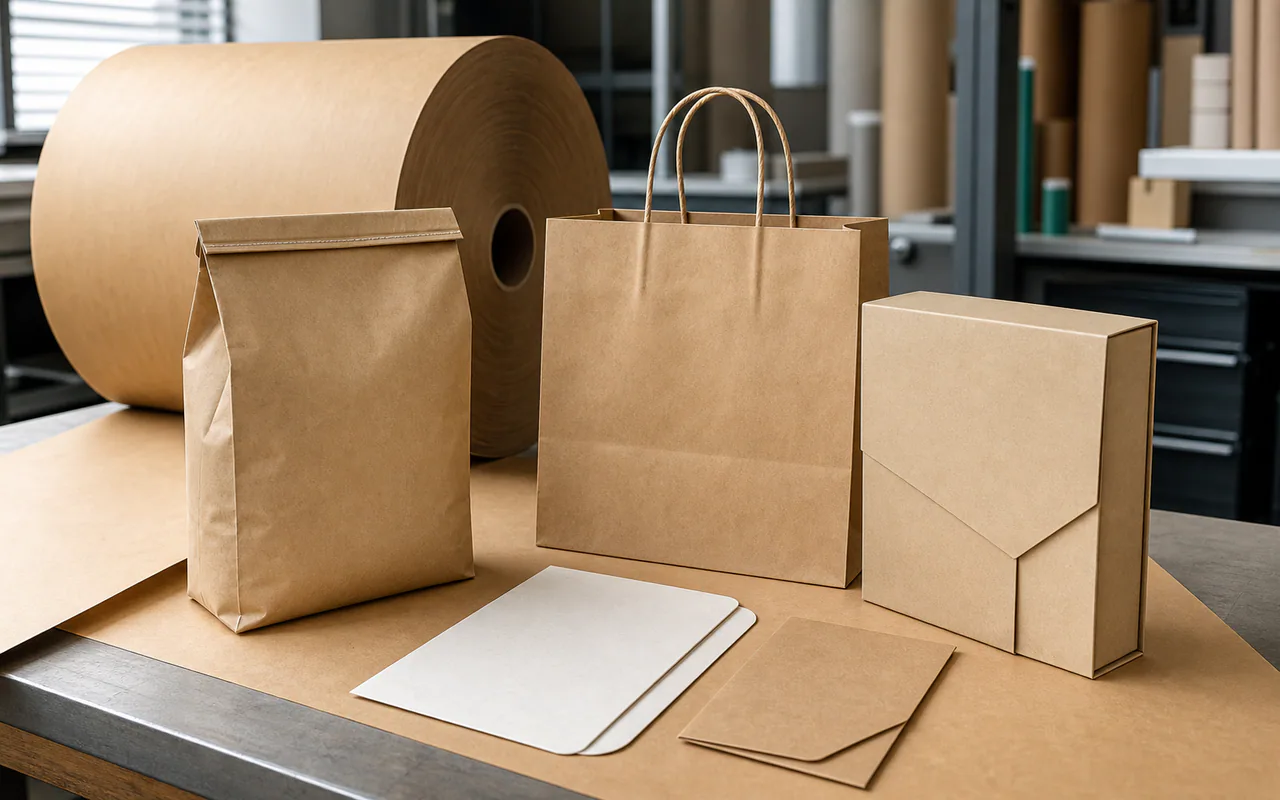
Kraft paper has moved far beyond basic wrapping. Today it is used in paper bags, envelopes, corrugated liners, product sleeves, food service packaging and premium brand packaging. Its natural appearance, strength and recyclable character make it a practical choice for both industrial and retail applications.
For packaging buyers, kraft paper is attractive because it balances function and brand image. It can look simple and natural while still performing well in converting, printing and packing.
What Is Kraft Paper?
Kraft paper is a strong paper grade known for its tear resistance and natural fiber appearance. It is commonly available in brown natural kraft, bleached white kraft and recycled kraft options.
Its surface can be uncoated, coated, laminated or converted depending on the end use. Kraft paper can be supplied in rolls or sheets and can be customized by GSM, width, size and packing method.
Common Applications
Kraft paper is widely used for:
- Paper shopping bags
- Food bags and bakery bags
- Wrapping paper
- Envelopes and mailers
- Corrugated facing and liners
- Product sleeves
- Industrial packaging
- Eco-style gift packaging
- Protective interleaving paper
For retail brands, kraft paper gives packaging a natural and responsible appearance. For industrial users, it provides strength and practicality.
Natural Kraft vs White Kraft
Natural kraft paper has a brown fiber appearance. It is commonly used when brands want a simple, organic or recycled visual style. White kraft paper is suitable when a cleaner background or stronger print contrast is needed.
Natural kraft is often selected for:
- Eco-style bags
- Natural product packaging
- Industrial wrapping
- Rustic brand presentation
White kraft is often selected for:
- Printed bags
- Branded sleeves
- Cleaner retail packaging
- Food service presentation
The right choice depends on printing requirements, brand style and end-use performance.
Why Brands Use Kraft Paper
Kraft paper communicates simplicity, strength and environmental awareness. It is especially popular among brands in food, fashion, cosmetics, handmade products, organic products and e-commerce packaging.
Key benefits include:
- Strong tear resistance
- Natural visual appeal
- Good converting performance
- Recyclable packaging image
- Suitable for bags, wraps and liners
- Compatible with printing and lamination options
Kraft paper also works well with minimal design. A simple logo printed on natural kraft can create a premium, understated look. It also pairs well with fancy paper accents for brand packaging.
Important Sourcing Specifications
When sourcing kraft paper, buyers should confirm:
- GSM
- Roll width or sheet size
- Natural, bleached or recycled grade
- Surface finish
- Tensile strength requirements
- Printing method
- Moisture requirements
- Food-contact requirements if applicable
- Packing method
- Certification needs
For paper bag production, strength and folding performance matter. For wrapping paper, hand feel and printability may be more important. For corrugated applications, tensile strength and runnability are critical.
Kraft Paper and Food Packaging
Kraft paper can be used in food packaging, but the correct grade and treatment must be selected. Some food packaging applications may require grease resistance, barrier coating, PE coating or other functional treatment.
Buyers should always confirm food-contact documents based on destination market and final use. A bakery bag, a dry food wrapper and a hot drink cup stock have different requirements.
Export Buyer Tips
For international buyers, kraft paper is often ordered in large-volume rolls or sheets. Before ordering, check:
- Container loading method
- Roll diameter and core size
- Pallet size
- Moisture protection
- Labeling requirements
- Documentation
- Delivery lead time
Clear export packing helps reduce damage and makes warehouse handling easier at destination.
Conclusion
Kraft paper is one of the most versatile paper packaging materials. It can be used for industrial strength, natural retail presentation and sustainable brand communication. The key is to match the grade to the final product: bag, wrap, liner, sleeve or food packaging.
For buyers, the best results come from sharing the end use, GSM, width, quantity and destination early in the sourcing process.
FAQ
What is kraft paper used for?
Kraft paper is used for bags, wrapping, envelopes, liners, sleeves, food bags and industrial packaging.
Is kraft paper recyclable?
Many kraft paper grades are recyclable, depending on coatings, laminations and local recycling systems.
Can kraft paper be printed?
Yes. Kraft paper can be printed, but the final print effect depends on surface color, ink, coating and printing method.
What is the difference between natural kraft and white kraft?
Natural kraft has a brown fiber appearance. White kraft is bleached and offers a cleaner background for printing.