
Luxury Packaging · 2026-11-19
Magnet-Free Rigid Boxes: The Detail That Holds the Design Together
A rigid box can look convincing while open and still fail at the last few millimetres of closure. Approve the paper construction with its real contents, not just an empty presentation sample.
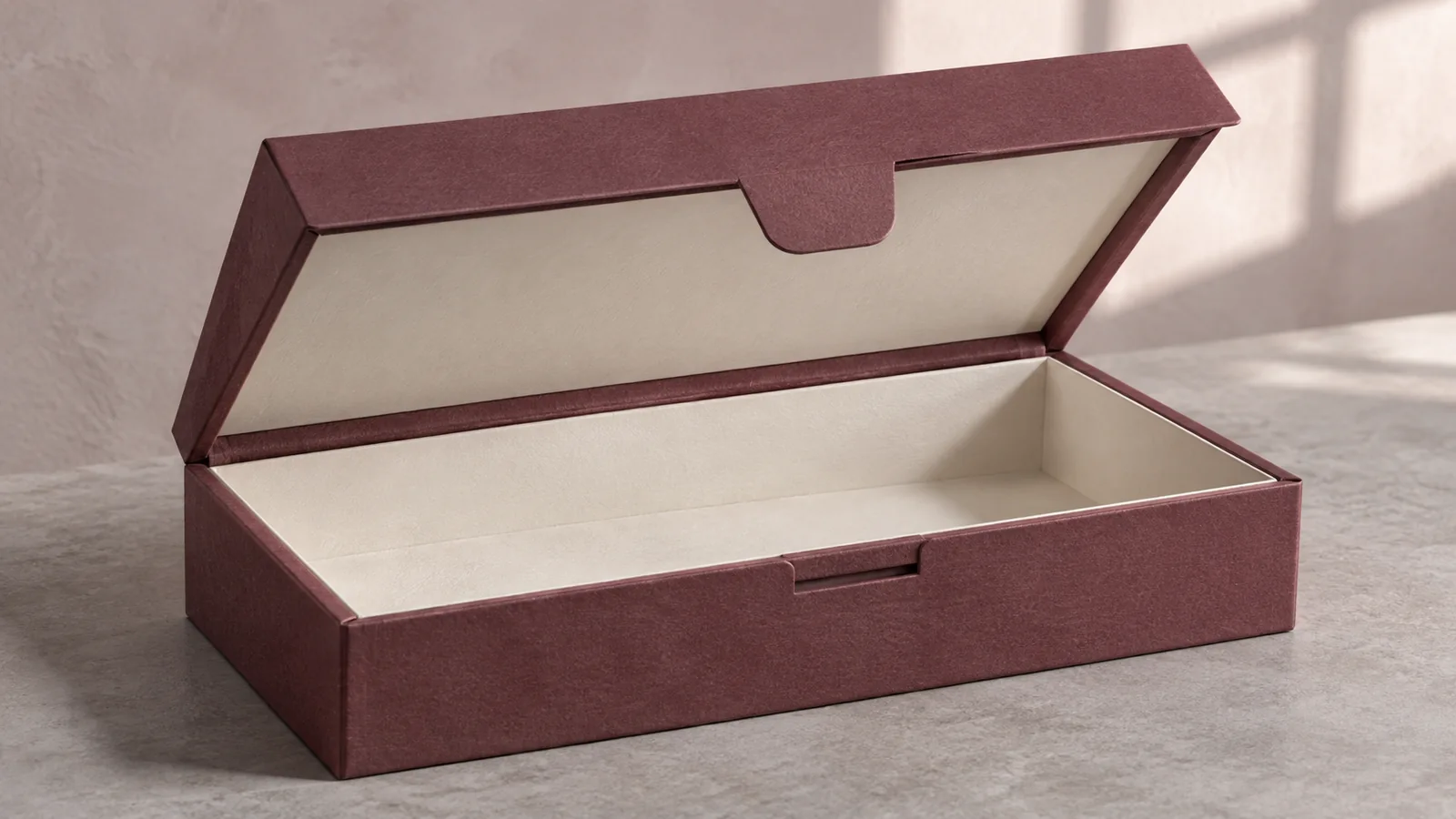
A luxury rigid box without magnets needs an engineered closing system, not simply an unchanged box with the magnets removed. Approve the board, wrap, hinge and closure as a finished, loaded construction. An attractive open sample does not show whether the doors meet evenly or whether the lid stays closed after handling.
The topic is back in the industry spotlight. Packaging Europe reported on 19 November 2026 on GPA Global's paper-based presentation packaging for Midleton Very Rare. Its account distinguishes the earlier paper redesign from the 2026 Vintage version, which removed magnetic closures. This is renewed coverage of a developed project, not a new material launch on that date.
The Pentawards project description identifies grey board, white kraft wrapping, paper pulp fitments and unlaminated white kraft E-flute corrugate in the later construction. It preserves a double-door opening. That is an instructive example of redesigning a material system, not proof that every magnet-free box is recyclable or that one board grade will reproduce its performance. The case is GPA Global's work, not a YOUNGSUN PAPER customer project.
Write the closing function before choosing the paper
Describe what the closure must do in the intended use. Must it resist opening during shelf handling, align two doors for display, or survive repeated use as a keepsake? Does the user need a clear opening point? Does a separate sleeve retain the pack? These are different requirements.
A paper tab, sleeve or another mechanical paper construction can be considered by the box designer. Those are generic design options, not a claim about the mechanism used in the Midleton case. Ask for a drawing that shows the retaining feature, its contact surfaces and dimensional allowances. A drawing marked only “no magnets” leaves the most important function undefined.
Separate three jobs inside the same box
The board carries the structure. Specify the selected grey board grade, nominal caliper and agreed tolerance, sheet format and relevant directional properties. Grammage alone does not define how a finished panel, hinge gap or closing feature will behave. Do not automatically increase board thickness to solve a closure problem: it also changes the geometry to be checked.
The wrapping paper carries the surface and turn-ins. Record the specialty wrapping paper grade, thickness, direction, finish and any printing or coating. Include the actual adhesive and application process in the converter's construction record. A decorative paper substitution should trigger another wrapped sample, particularly around the hinge, corners and closing contact areas.
The hinge and retaining feature control movement. Document their position, dimensions and assembly method. Check for rubbing, unintended spring-back, lifting paper, tearing or separation during use. A stronger panel does not by itself demonstrate a durable paper hinge or a workable closure.
Use a loaded approval sequence, not a showroom demonstration
The following is our proposed procurement sequence, not a standardized test or a guarantee for any supplied material. Agree the sample quantity, conditioning, number of opening cycles and acceptance limits with the converter and brand before testing.
- Record the starting condition. Use a production-representative wrapped sample. Photograph the closed pack from the same positions and note door or lid alignment, visible gaps and any initial damage.
- Fit the actual contents. Include the intended insert and all supplied items. Confirm that the contents or insert do not obstruct closure. Compare the empty and loaded pack rather than assuming they behave identically.
- Repeat the intended opening motion. Use a documented sequence appropriate to the expected use. Note when the hinge, tab or edge first changes, and whether closing requires more effort or a different action. There is no universal cycle count supplied by this article.
- Check after relevant storage and handling. Agree conditions with the technical team for the actual distribution route. Reinspect the same features after conditioning and handling; do not approve a humid-market application solely from a dry showroom sample.
- Assess the complete shipment separately. Test the packed product with its transit packaging where transport performance is required. ISTA's procedure selection resources distinguish different distribution tests. Let a competent lab select a suitable procedure; testing an empty gift box is not evidence for the shipped product.
Make the approval record useful when a sample fails
| Record | What the buyer and converter should agree |
|---|---|
| Construction identity | Board and wrap grades, adhesive, drawing revision, sample lot and assembly process |
| Product configuration | Contents, insert, accessories and orientation inside the pack |
| Closure criteria | Allowed gap or misalignment, retention requirement and acceptable opening effort, defined for this design |
| Inspection points | Initial, after agreed opening sequence, after conditioning and after route-relevant handling |
| Failure evidence | Location, photograph, first observed stage and whether the issue repeats across samples |
If a lid lifts, keep the failed sample and compare the drawing, paper, adhesive and assembly records before changing several variables at once. Separate a dimensional mismatch from surface damage or a failed bond. Ask for a revised sample with a clear change record, not just a promise of “thicker board.” Compare cost per accepted box, including assembly time, rejects and any added retaining component.
Keep recyclability claims about the complete construction
Removing magnets is a material change, not automatic recycling approval. Request the final bill of materials, including wrap, inks, coatings, adhesive, fitments and transit components. The 4evergreen protocol assesses technical recyclability for defined processes. Check destination collection and sorting separately before choosing a consumer claim.
For EU-bound packaging, consult the European Commission's packaging-waste overview and confirm the applicable requirements with the responsible compliance specialist. A design award is not regulatory certification. Do not transfer another project's recycling or environmental claims to your box.
What to send when requesting board and wrapping samples
Share the box drawing, contents and weight, closure concept, current board and wrap, target finish, expected handling and destination market. Explain which component is changing and what failed, if anything. See our luxury and cosmetics applications or send the material brief to YOUNGSUN PAPER. We can discuss candidate paper, board and available documentation; the box converter must validate the complete closure and assembly.
Frequently asked questions
Can I replace magnets by using thicker grey board?
Not as a general solution. The closing function needs a suitable design, and thicker board changes the construction dimensions. Validate the finished pack rather than selecting by thickness alone.
How many opening cycles should a paper hinge pass?
There is no universal number for all presentation boxes. Agree it from the intended use, along with conditioning, sample quantity and failure criteria, before testing.
Does a magnet-free rigid box qualify as fully recyclable?
Not automatically. The complete construction and its technical recycling evidence matter, as do collection and sorting arrangements in the destination market.