
Design · 2026-07-26
Gold Card Paper: The Ultimate Guide to Metallic Luxury in Packaging and Print
Gold card paper transforms ordinary packaging into an event. This guide covers gold metallic paper grades, foil vs. coating, design techniques, and applications across cosmetics, wine, gifts, weddings, and luxury stationery.
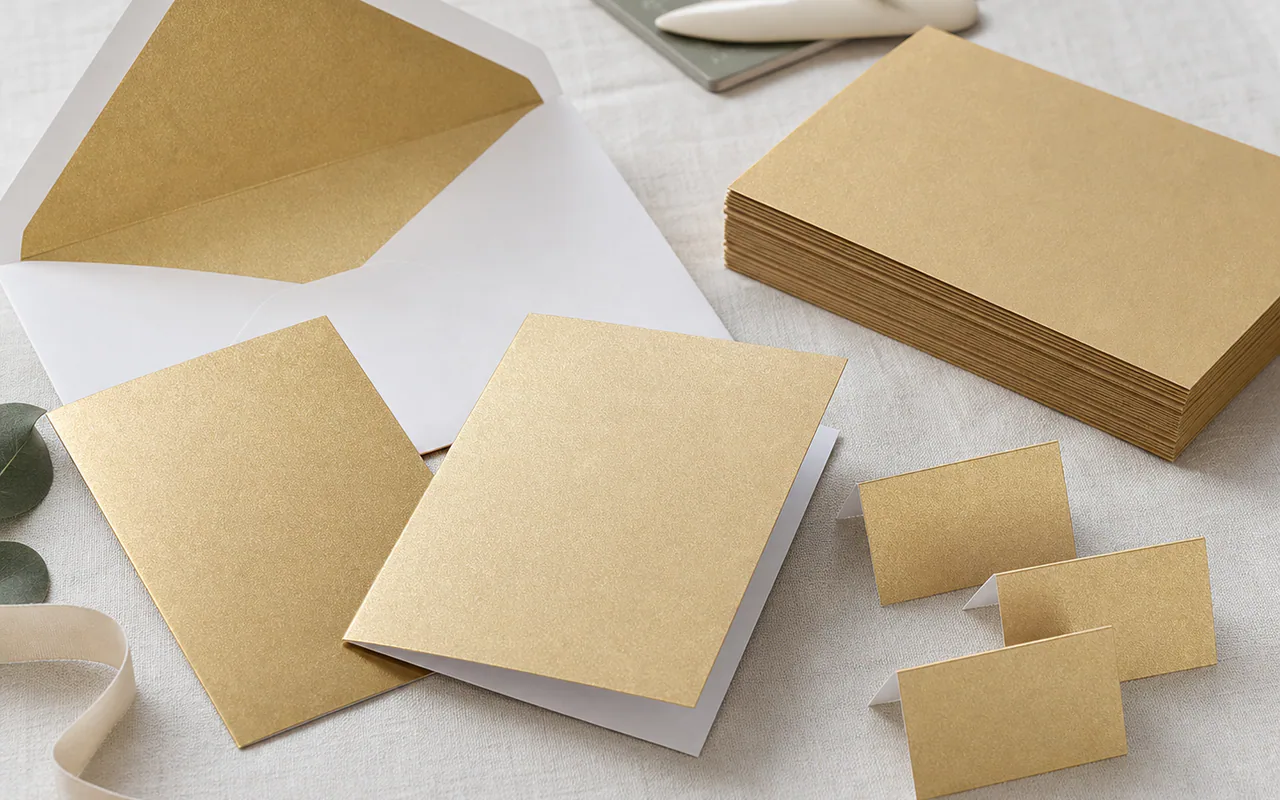
There is a reason gold has been the color of luxury for five thousand years. When a customer sees a gold box, a gold-trimmed invitation, or a gold-stamped hang tag, their brain registers value before they consciously process what they're looking at. It is the most primal visual signal of quality in packaging.
Gold card paper — also called gold foil paper, metallic gold board, or gold laminated card — delivers that signal at a fraction of the cost of actual gold stamping. This guide covers everything buyers and designers need to know about selecting, specifying, and applying gold card paper.
What Is Gold Card Paper?
Gold card paper is paper or paperboard with a brilliant gold metallic surface. The gold effect is achieved through one of two manufacturing methods:
1. Gold Foil Lamination
A thin metallic gold film (typically PET-based) is thermally bonded to a paper or board substrate. This produces the most brilliant, mirror-like gold surface.
Characteristics:
- Maximum reflectivity — true mirror gold
- Excellent surface durability
- Available in light gold, champagne, rose gold, and deep gold tones
- Can be laminated on one or both sides
- Substrate options: grey board, duplex board, C2S art board, black paper
2. Gold Metallic Coating
A gold-pigmented coating is applied to the paper surface via gravure or flexographic process, then cured. Less reflective than foil lamination but more economical for large solid areas.
Characteristics:
- Soft, satin metallic sheen (not mirror)
- Lower cost than foil lamination
- Better printability — can be overprinted with inks
- Available in a wider color range (antique gold, brushed gold, champagne)
Which to Choose?
| Requirement | Foil Laminated Gold Card | Metallic Coated Gold Card |
|---|---|---|
| Mirror reflectivity | ★★★★★ | ★★☆☆☆ |
| Cost | $$ | $ |
| Surface durability | ★★★★☆ | ★★★☆☆ |
| Overprinting (ink on gold) | Limited | Good |
| Best for | Max impact, small areas | Large solid areas, economy |
Applications: Where Gold Card Paper Shines
Wedding Stationery
Gold wedding invitations, RSVP cards, place cards, and menus are among the most popular applications. Gold on white or cream paper creates an instantly celebratory, elegant impression. Through-dyed black paper with gold foil is the classic luxury wedding combination.
Cosmetics & Perfume Packaging
A gold-embellished perfume box signals indulgence. Gold card paper is widely used for cosmetic gift sets, limited-edition packaging, and premium skincare presentation boxes.
Wine & Spirit Gift Cartons
Gold metallic accents on wine gift cartons communicate premium quality and make the product gift-ready without additional wrapping. Gold foil stamping on a dark matte background is the standard luxury wine packaging aesthetic.
Chocolate & Confectionery
Gold packaging has been the standard for premium chocolate since the 19th century. Gold card paper is used for chocolate boxes, truffle trays, and seasonal confectionery gift packaging.
Jewelry & Accessories
Gold card inserts, presentation trays, and gift boxes elevate the unboxing experience for jewelry, watches, and luxury accessories. The gold surface mirrors the value of the product inside.
Shopping Bags & Hang Tags
Gold foil-embellished shopping bags and hang tags are walking advertisements for luxury brands. The gold catches light and draws attention in retail and street settings.
Design Techniques for Gold Card Paper
1. Foil on Gold — Double Luxury
Applying gold hot stamping foil ON TOP of gold card paper creates a subtle tone-on-tone effect — the stamped area has a slightly different gold hue and a debossed texture. This understated technique is favored by minimalist luxury brands.
2. Debossing on Gold
A blind deboss (no ink, no foil — just pressure) on gold card creates a recessed design with subtle depth. The debossed area appears slightly darker, creating contrast through texture alone.
3. Overprinting on Gold
Printing dark ink (black, navy, deep green) on gold card creates a dramatic contrast. The gold shows through the unprinted areas while the dark ink provides readability and brand messaging. This technique works best on metallic coated gold paper.
4. Gold + Texture
Combining gold card paper with an embossed texture (linen, leather grain, geometric) adds tactile dimension. The texture catches light differently across the surface, creating a dynamic, living metallic effect.
5. Gold + Soft Touch
A soft-touch coating applied selectively to gold card paper creates a striking tactile contrast — matte velvet against brilliant metallic. The soft-touch areas deepen the gold to a warm, muted tone while the uncoated areas remain brilliantly reflective.
Specifications and Sourcing
Available Configurations
| Property | Range |
|---|---|
| Substrate | Grey board, duplex board, C2S art board, black paper, white card |
| Grammage | 120–400 gsm (card), up to 1500 gsm (laminated heavy board) |
| Gold tones | Bright gold, champagne gold, rose gold, antique gold, copper gold |
| Coating | Single-side or double-side |
| Sheet sizes | 787×1092mm, 889×1194mm, custom |
| MOQ | 1 metric ton (standard tones), higher for custom color matching |
What to Specify When Ordering
- Required gold tone (send a physical sample or Pantone metallic reference)
- Substrate type and GSM
- Single-side or double-side gold
- Sheet size or reel width
- Intended application (printing, die-cutting, foil stamping, embossing)
- Destination market and any certification requirements (FSC available)
Production and Delivery
- Standard lead time: 2–3 weeks from order confirmation
- Custom color matching: add 1–2 weeks
- Container loading: ~25 tons per 40HQ container
- FSC certification available on request
Care and Handling
Gold card paper surfaces can show fingerprints, scratches, and scuffs more visibly than uncoated papers. Best practices:
- Handle with cotton gloves during production and assembly
- Use interleaving tissue between sheets during storage and transport
- Avoid direct finger contact with the gold surface — the natural oils in skin can leave permanent marks
- Consider lamination — a thin protective film over the gold surface reduces fingerprint visibility
- Test die-cutting pressure — excessive pressure can crack the metallic layer around cut edges
Cost Considerations
Gold card paper typically costs 30–80% more than the same substrate without gold finishing, depending on:
- Foil lamination vs metallic coating (foil is more expensive)
- Single-side vs double-side
- Substrate type (grey board base is less expensive than C2S art board base)
- Gold tone (specialty tones like rose gold or antique gold may cost more)
- Order quantity (larger orders reduce per-unit cost)
Sustainability
Gold foil laminated paper is more difficult to recycle than uncoated paper because the metallic PET film must be separated from the paper fiber. However:
- FSC certified substrates are available
- The metallic layer represents a very small percentage of total material weight
- Some recyclers accept metallic laminated paper in the mixed paper stream
- For brands prioritizing recyclability, gold metallic coating (vs foil lamination) is the preferred option
Why Buyers Choose Gold Card Paper
- Instant perceived value — No other finish communicates luxury as immediately as a gold metallic surface.
- Versatility across sectors — From wedding stationery to wine cartons, gold works across categories.
- Photographs beautifully — Gold surfaces catch light and create dynamic, social-media-friendly packaging shots.
- Timeless appeal — Unlike trend-driven colors, gold has been associated with quality for millennia and will not date.
- Pairs with everything — Gold works with black, white, cream, navy, burgundy, forest green — essentially any brand palette.