
Packaging · 2026-07-24
How to Reduce Paper Packaging Costs Without Sacrificing Quality: 8 Proven Strategies
Packaging cost pressure is real, but quality doesn't have to suffer. These 8 proven strategies help buyers reduce paper and board costs by 10-25% through smarter specification, sourcing, and logistics.
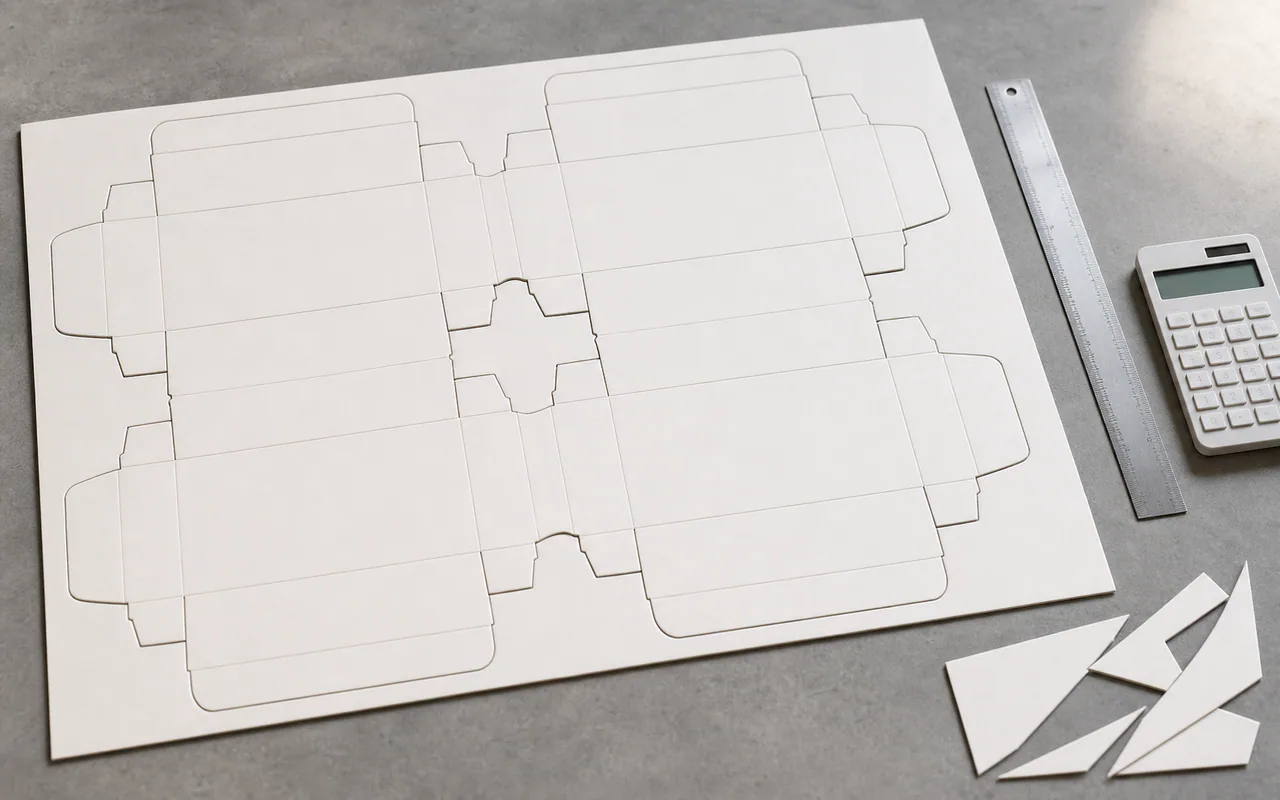
Every packaging buyer faces the same pressure: reduce costs, maintain quality. The easy answer is "switch to a cheaper supplier" — but that usually means lower quality, later deliveries, or missing certifications.
These 8 strategies reduce your paper and board costs by 10–25% while maintaining — or even improving — packaging quality. No supplier switch required.
Strategy 1: Optimize GSM Without Sacrificing Performance
The most common over-specification in paper buying: ordering 350 gsm when 300 gsm would perform identically.
The math:
- 350 gsm board at $800/ton = $0.28 per square meter
- 300 gsm board at $800/ton = $0.24 per square meter
- Savings: 14% in material cost
How to test: Order sample sheets of the next GSM down (e.g., 300 gsm instead of 350). Run them through your full production process — printing, die-cutting, folding, gluing, filling, shipping. If the finished box performs acceptably, you just found a permanent cost reduction.
Where this works best: Rigid boxes, retail cartons, display packaging — anywhere GSM is specified by habit rather than by testing.
Where to be careful: Cupstock (too light = cup collapses), heavy-duty shipping boxes, structural components.
Strategy 2: Optimize Sheet Size to Reduce Trim Waste
Standard sheet sizes (787×1092mm, 889×1194mm) are efficient for standard box formats. But if your box layout wastes 15% of the sheet as trim, you're paying for 15% more paper than you need.
The fix: Custom sheet sizes slitted to your exact layout dimensions.
Example:
- Standard sheet 787×1092mm = 0.86 m² per sheet
- Your box layout uses only 0.72 m² (16% trim waste)
- Switch to a custom 740×1020mm sheet at 0.75 m²
- Savings: 12% fewer square meters per box
What to ask your supplier: "Can you supply custom-cut sheets to my exact layout size? What is the MOQ for custom sizes?"
YOUNGSUN capability: Custom sheet sizes available with ±1mm cutting tolerance. MOQ: 1 ton per size.
Strategy 3: Switch from Virgin to Recycled Board (Where Appropriate)
Recycled board (grey board, recycled duplex) costs 15–30% less than equivalent virgin-fibre board (FBB).
When recycled works:
- Rigid box structures (wrapped — customer never sees the base board)
- Industrial packaging, backing boards, dividers
- Any application where the board is not directly printed or visible
When to stick with virgin:
- Direct food contact (virgin fibre preferred in many markets)
- Premium printed surfaces (recycled board has lower brightness)
- Applications requiring maximum folding endurance
Real example: A European cosmetics brand switched their rigid box base from virgin-fibre board to YOUNGSUN FSC Recycled grey board. Material cost reduced 22%, FSC Recycled certification achieved, zero quality difference in the finished box.
Strategy 4: Buy Full Containers, Not Partial Loads
LCL (less-than-container-load) shipping costs 40–60% more per ton than FCL (full-container-load).
Example: Shenzhen → Hamburg
- LCL: $120–180 per ton (sharing container space)
- FCL (40HQ, 25 tons): $60–80 per ton
- Savings: $60–100 per ton
If you don't need 25 tons:
- Combine multiple products in one container (mixed loading is standard)
- Coordinate with a nearby buyer to share a container
- Build inventory — the freight savings usually outweigh carrying costs
Strategy 5: Negotiate Annual Contracts Instead of Spot Buying
Spot market paper prices fluctuate. Annual or semi-annual contracts with volume commitments typically secure 5–12% lower pricing than spot purchases.
What suppliers want in return:
- Volume commitment (e.g., 10 containers per year)
- Predictable delivery schedule
- Longer payment terms may be offered
What you get:
- Lower, locked-in pricing
- Priority production scheduling
- Consistent quality (same mill, same specification)
Strategy 6: Standardize Specifications Across Product Lines
If you produce 12 different box SKUs using 6 different board specifications, you're paying a complexity premium.
The fix: Rationalize to 2–3 standard board specifications that cover all SKUs.
Example:
- Before: 6 board specs (different GSM, size, grade) × 6 MOQs × 6 inventory lines
- After: 2 board specs × 2 MOQs × 2 inventory lines
- Savings: Larger per-spec order quantities = lower per-unit pricing, simpler inventory, fewer SKU codes
Strategy 7: Reduce Damage Rates with Better Packing
A 2% transit damage rate on a 25-ton container = 500 kg of unusable paper worth $300–400. Better export packing costs pennies per ton and drops damage rates to near zero.
Specify:
- PE film moisture-barrier wrapping on every pallet
- Desiccant packs (10–15 kg per 40HQ container)
- Edge protectors / corner boards
- IPPC heat-treated pallets
ROI: $15–25 per container in packing upgrades saves $300–400 in damage claims.
Strategy 8: Challenge Every Specification
The most powerful cost-reduction question in paper buying: "Why this specification?"
| Specification | Challenge Question |
|---|---|
| 350 gsm FBB | Could 300 gsm perform the same? |
| Virgin fibre only | Could recycled content work? |
| 787×1092mm sheet | Could a custom size reduce trim? |
| CIF delivery | Could you get better freight rates on FOB? |
| Monthly ordering | Could quarterly ordering secure volume pricing? |
| Gloss lam on everything | Could some lines use matt (cheaper)? |
Putting It All Together: A Real Scenario
| Strategy | Action | Annual Savings |
|---|---|---|
| GSM optimization | 350→300 gsm on 50% of volume | $4,200 |
| Custom sheet size | 12% trim waste eliminated | $3,600 |
| Recycled board | 30% volume switched | $2,800 |
| Full containers | Eliminate LCL shipments | $3,000 |
| Annual contract | 8% price reduction | $4,800 |
| Better packing | 2%→0.3% damage rate | $1,200 |
| Total | $19,600/year |
*Based on a mid-size converter purchasing 200 tons per year at average $750/ton.*
Conclusion
Cost reduction doesn't mean sacrificing quality. The most effective strategies — GSM optimization, custom sheet sizes, full container shipping — actually improve quality consistency while reducing cost.
Start with one strategy. Test it on a single product line. Measure the results. Then roll out what works.
Request a quote and mention which cost-reduction strategies you'd like to explore. We'll help you find savings without compromising your packaging quality.