
Guides · 2026-07-24
Ocean Freight for Paper Buyers: Container Types, Costs, Transit Times, and Documentation
Understanding ocean freight is essential for paper importers. This guide covers container types and capacities, transit times from China to major ports, shipping documents, and practical tips to reduce freight costs.
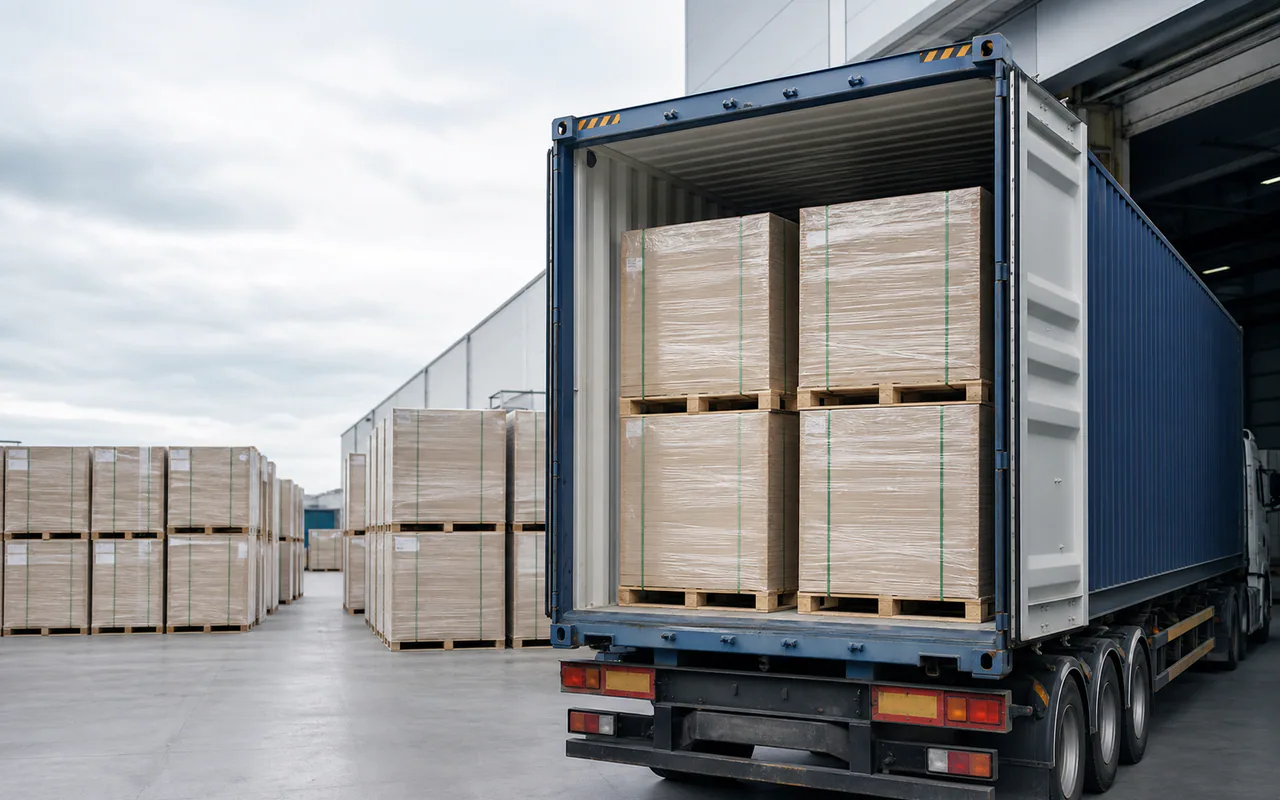
Paper is heavy. A single 40-foot container of paperboard can weigh 25 metric tons — more than a fully loaded 18-wheeler truck. Understanding container logistics is not optional for paper importers; it's the difference between profitable sourcing and losing money on freight.
This guide covers everything international paper buyers need to know about ocean freight from China.
Container Types and Paper Capacity
20-Foot Container (20GP)
- Internal dimensions: 5.9m × 2.35m × 2.39m
- Volume: ~33 cubic meters
- Max payload: ~28 tons (but paper usually maxes out weight before volume)
- Paper capacity: 15–18 metric tons (depending on product density)
- Best for: Trial orders, smaller volumes, destinations with weight restrictions
40-Foot Container (40GP)
- Internal dimensions: 12.03m × 2.35m × 2.39m
- Volume: ~67 cubic meters
- Max payload: ~26–28 tons
- Paper capacity: 22–26 metric tons
- Best for: Regular orders, medium-volume buyers
40-Foot High Cube (40HQ)
- Internal dimensions: 12.03m × 2.35m × 2.69m (30cm taller)
- Volume: ~76 cubic meters
- Max payload: ~26–28 tons
- Paper capacity: ~25 metric tons (industry standard for paper)
- Best for: Most paper and board orders — the extra height allows better pallet stacking
Why 40HQ is the Paper Industry Standard
Paper and paperboard are dense products. You typically hit the weight limit (25–26 tons) before filling the volume of a 40HQ. This makes 40HQ the most cost-effective option: you maximize payload while the freight cost difference between 40GP and 40HQ is minimal.
Transit Times from Shenzhen to Major Destinations
| Destination Region | Port Example | Transit Time | Notes |
|---|---|---|---|
| Southeast Asia | Singapore, Jakarta | 7–12 days | Fastest routes |
| Middle East | Dubai, Jeddah | 15–20 days | Via Strait of Malacca |
| North America (West) | Los Angeles, Vancouver | 15–22 days | Direct Pacific crossing |
| North America (East) | New York, Savannah | 28–35 days | Via Panama Canal |
| Europe (North) | Hamburg, Rotterdam | 30–35 days | Via Suez Canal |
| Europe (South) | Barcelona, Valencia | 28–33 days | Via Suez Canal |
| South America (West) | Buenaventura, Callao | 30–35 days | Trans-Pacific |
| South America (East) | Santos, Buenos Aires | 35–40 days | Via Cape of Good Hope |
| Africa (East) | Mombasa, Dar es Salaam | 25–30 days | Via Strait of Malacca |
| Africa (West) | Lagos, Abidjan | 35–40 days | Via Cape of Good Hope |
| Australia | Sydney, Melbourne | 18–25 days | Direct Pacific |
*Times are approximate and vary by carrier, season, and port congestion. Add 1–2 weeks for inland trucking/rail to your final delivery address.*
Total Timeline: Order to Delivery
``` Week 1–3: Production (paper making, cutting, packing) Week 3–4: Inland transport to port + customs export clearance Week 4–10: Ocean transit (varies by destination) Week 10–11: Import customs clearance + port handling Week 11–12: Inland delivery to your warehouse
TOTAL: ~6–12 weeks from order confirmation to delivery ```
Required Shipping Documents
Every paper export shipment requires these documents:
| Document | Purpose | Issued By |
|---|---|---|
| Bill of Lading (B/L) | Proof of shipment, title to goods | Shipping line |
| Commercial Invoice | Transaction record, customs valuation | Supplier |
| Packing List | Container contents, weight, dimensions | Supplier |
| Certificate of Origin | Proves country of manufacture | Chamber of Commerce |
| FSC Certificate | Chain of custody documentation | Supplier / Certifier |
| SGS Test Report | Third-party quality verification | SGS (if requested) |
| FDA Compliance Letter | Food-contact material declaration | Supplier (if applicable) |
Key Freight Terms: FOB vs CIF
FOB (Free On Board): The supplier pays all costs until the goods are loaded onto the vessel at the port of origin. YOU arrange and pay for ocean freight, insurance, and destination charges.
CIF (Cost, Insurance, Freight): The supplier includes ocean freight and insurance in the price. The supplier arranges shipping to your destination port. You handle import clearance and inland delivery.
Which Should You Choose?
- New buyer / first order: CIF is simpler. One price, one point of contact.
- Experienced importer with freight forwarder relationships: FOB gives you more control over carrier choice and potentially lower costs.
- Small volume (<5 tons): CIF is almost always better — you won't get competitive freight rates on small volumes.
5 Practical Tips to Reduce Freight Costs
- Always ship full containers. Less-than-container-load (LCL) paper shipments cost 40–60% more per ton than full-container-load (FCL).
- Use 40HQ containers. The cost difference between 40GP and 40HQ is minimal ($100–200), but 40HQ fits more paper — lowering your per-ton freight cost.
- Plan for port proximity. YOUNGSUN is 50km from Shenzhen port. Shorter inland trucking = lower FOB cost.
- Negotiate annual freight contracts. If you ship 10+ containers per year, negotiate annual rates with carriers — savings of 15–25% vs spot rates.
- Consolidate mixed orders. Combine multiple paper grades in one container instead of splitting across containers. Mixed loading is standard at YOUNGSUN.
What to Ask Your Supplier Before Shipping
- [ ] What is the container loading plan? (weight distribution, pallet layout)
- [ ] Are desiccants included for moisture protection?
- [ ] Are pallets IPPC heat-treated for export?
- [ ] What documentation package will I receive?
- [ ] Can you provide photos of the loaded container before sealing?
- [ ] What is the estimated vessel departure date?
The Bottom Line
Ocean freight can represent 10–25% of your total paper cost depending on destination. Understanding container types, transit times, and documentation requirements helps you budget accurately, avoid delays, and negotiate better terms.
Request a quote with your destination port, and we'll provide a detailed CIF quotation including ocean freight and all documentation.