
Labels & Packaging · 2026-11-23
Wash-Off Paper Labels: A Clean Bottle Is Only Half the Test
A label must stay attached during use and release at the right point in a return loop. Approve both states on the actual bottle, not just a loose paper sample or a clean-looking photograph.
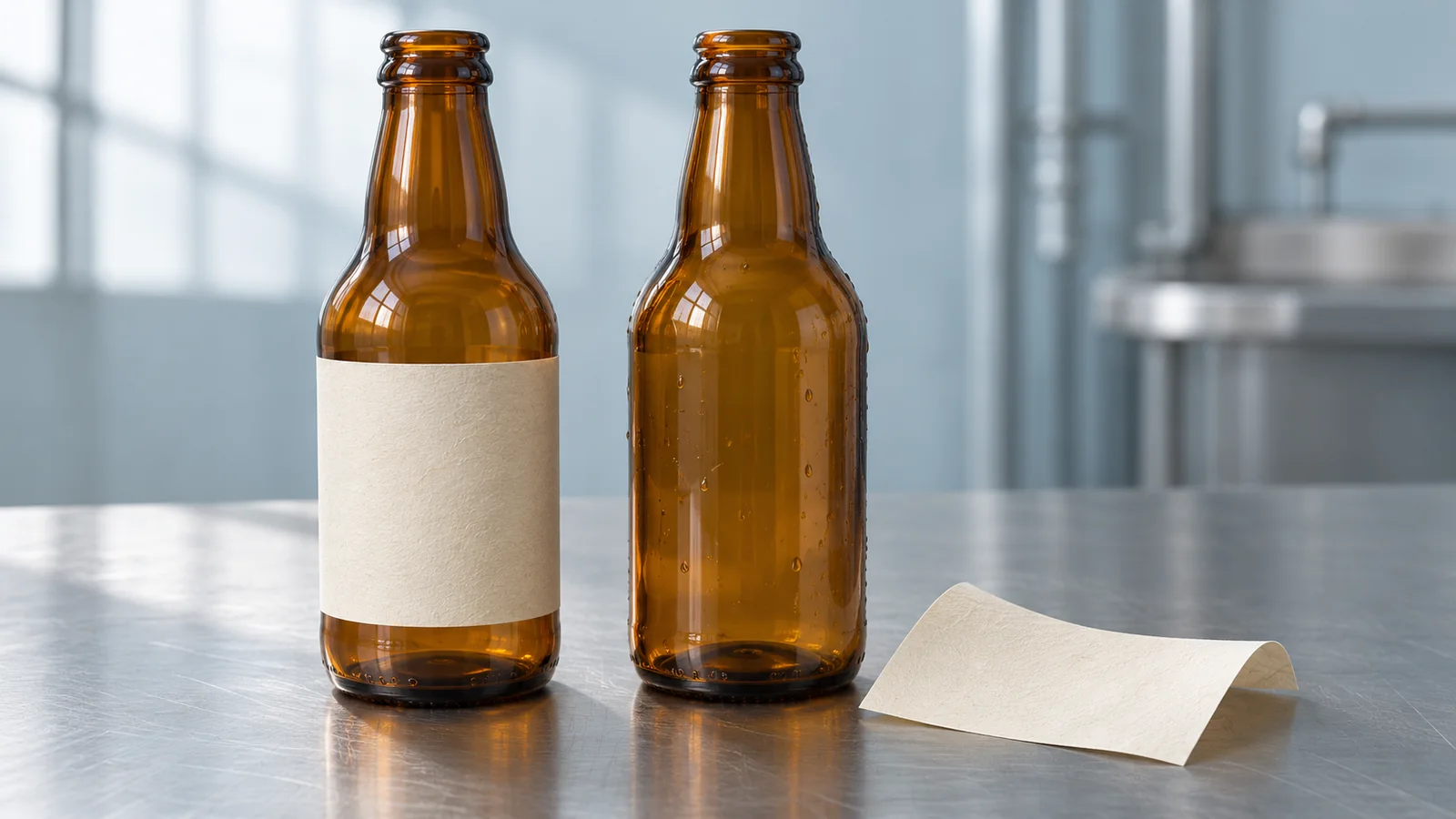
The same paper label may need to survive a chilled display and then come off in an industrial bottle washer. Those are opposite-looking requirements, but both belong in the purchase specification. A returnable-glass label needs approval for adhesion during use and removal in the intended washing process. A photo of a bare bottle proves neither the full use cycle nor readiness for the next filling.
Recent Packaging Europe coverage on 19 November highlighted wash-off technology among the FINAT Sustainability Awards winners. In its own announcement, Fedrigoni describes SH6020-W PLUS as combining reliable adhesion and wash-off performance when paired with selected approved wet-strength paper facestocks. That qualification matters more to a buyer than the award: it does not validate an arbitrary paper-and-adhesive combination or every bottle washer. The product and award predate this week's reporting.
Decide whether the label must leave or stay
This guide concerns a return-and-refill loop in which the old label is removed before the glass bottle is relabeled. It is not a guide to crushing bottles into cullet, nor to labels intended to remain through several reuse cycles. UPM's guidance on reusable packaging labels makes the same distinction between clean-release constructions and permanent labels for other reuse models.
Ask the brand and washing operator to confirm the intended route before requesting paper. If the bottle will be recycled rather than refilled, the evidence must address that different process. Our earlier paper-label and plastic-recycling guide addresses a separate procurement decision and should not be used to approve glass-bottle reuse.
Wet-strength paper and wash-off adhesive do different jobs
Wet-strength describes a paper's resistance to breaking down when exposed to moisture; it is not a promise that the finished label will detach from glass. UPM's paper-label information identifies wet-strength applications and distinguishes adhesive choices. The converter should select the paper, adhesive and any coating together for the intended use.
Freeze the complete construction in the approval record: paper grade, adhesive reference, printing, varnish or other finish, label dimensions and application conditions. Include the bottle type, surface treatment and shape where relevant. A change to a decorative paper or varnish deserves a compatibility review rather than automatic transfer of the previous result.
Fedrigoni's technical overview of its wash-off solution separately describes industrial alkaline-wash validation for reuse and label separation after crushing for glass recycling. Those are different pieces of evidence. Request the report scope and tested construction rather than shortening both to “recyclable label.”
Put the washer's real profile in the trial brief
Have the washing operator identify the relevant process and permitted operating range. Record the actual cleaning chemistry and concentration, temperature, contact time and mechanical action, along with the condition of the labeled bottles entering the washer. Use the operator's validated process; this article does not prescribe a universal caustic concentration, temperature or wash time.
Compare the current approved label and the candidate under the same documented conditions. Include representative storage and label age before washing. Do not improve a weak result by extending the laboratory soak without recording that change: a longer soak is not proof that the normal line can process the label.
Use two acceptance gates and one release decision
The following is our suggested buyer trial plan, not a standardized method. Agree sample quantities, exposure conditions and pass limits with the converter, brand and washing operator before testing.
| Gate | What to check on the actual construction | Record needed |
|---|---|---|
| In use | Edge lift, sliding, visible paper damage and print condition after the intended cold, moisture and handling exposure | Label lot, bottle, application conditions, exposure profile and observations |
| In the washer | Label release, visible or otherwise assessed adhesive residue, paper fragments and any operational issue identified by the washer | Process settings, condition and age of samples, removal result and exceptions |
| Release for the next cycle | Whether the bottle meets the operator's cleaning and inspection requirements and can accept the next label as intended | Operator approval and relabeling observations under agreed conditions |
Keep label removal separate from hygienic cleaning. The bottle may look clear while still needing the operator's validated cleaning, inspection and release steps. Equally, a label that releases well but lifts prematurely in a cold display fails the other gate.
Retain failed bottles or labels with their lot references and photographs. If a new combination behaves differently, isolate the change before adjusting paper, adhesive and washer settings together. A one-off hand peel is not a substitute for the agreed industrial trial.
Price the accepted return loop, not just the label roll
Compare label material and conversion costs alongside application waste, rejected bottles, extra washing or handling and any effect on throughput. Ask who owns the trial and who signs the release. For a buyer in Mexico, Colombia or Chile, access to a return collection system and a suitable washing partner is a practical question to answer locally, not an assumption to inherit from a European example.
For EU sales, the European Commission's packaging overview provides the official policy starting point. Confirm applicable obligations with the responsible compliance specialist. A wash-off trial or design award is not a general regulatory approval for a bottle, label or reuse system.
Send a brief the paper supplier and converter can both use
Include the bottle reference and photograph, intended return route, required print finish, label size, use exposure, target application equipment and washer profile. State whether you need base paper or finished self-adhesive labelstock, who selects the adhesive and what evidence must accompany the samples.
Our label paper page is a starting point for discussing substrate options, not a claim that every listed paper is wet-strength or approved for wash-off. Explore hang-tag and label applications, or send the specification to YOUNGSUN PAPER. We can discuss candidate paper and available documentation; the converter and washing operator should validate the finished combination.
Frequently asked questions
Is wet-strength paper automatically a wash-off label?
No. Moisture resistance and removal from glass are different properties. The complete paper, adhesive and finish must suit the intended use and washing process.
Can a glass-recycling result approve a returnable-bottle label?
Not by itself. Recycling may involve crushing and material separation; returnable-bottle reuse requires the intact bottle to pass its cleaning, inspection and relabeling process.
What wash temperature should every paper label pass?
There is no universal temperature in this guide. Use the intended washing operator's validated profile, including chemistry, concentration, time and mechanical action, and agree acceptance criteria before testing.