
Packaging Procurement · 2026-11-09
The Paper Mailer Seals. But Will It Survive Delivery?
Heat-sealing can make a paper mailer on demand. The purchasing decision still depends on the paper, the actual seal and how the packed product performs in transit.
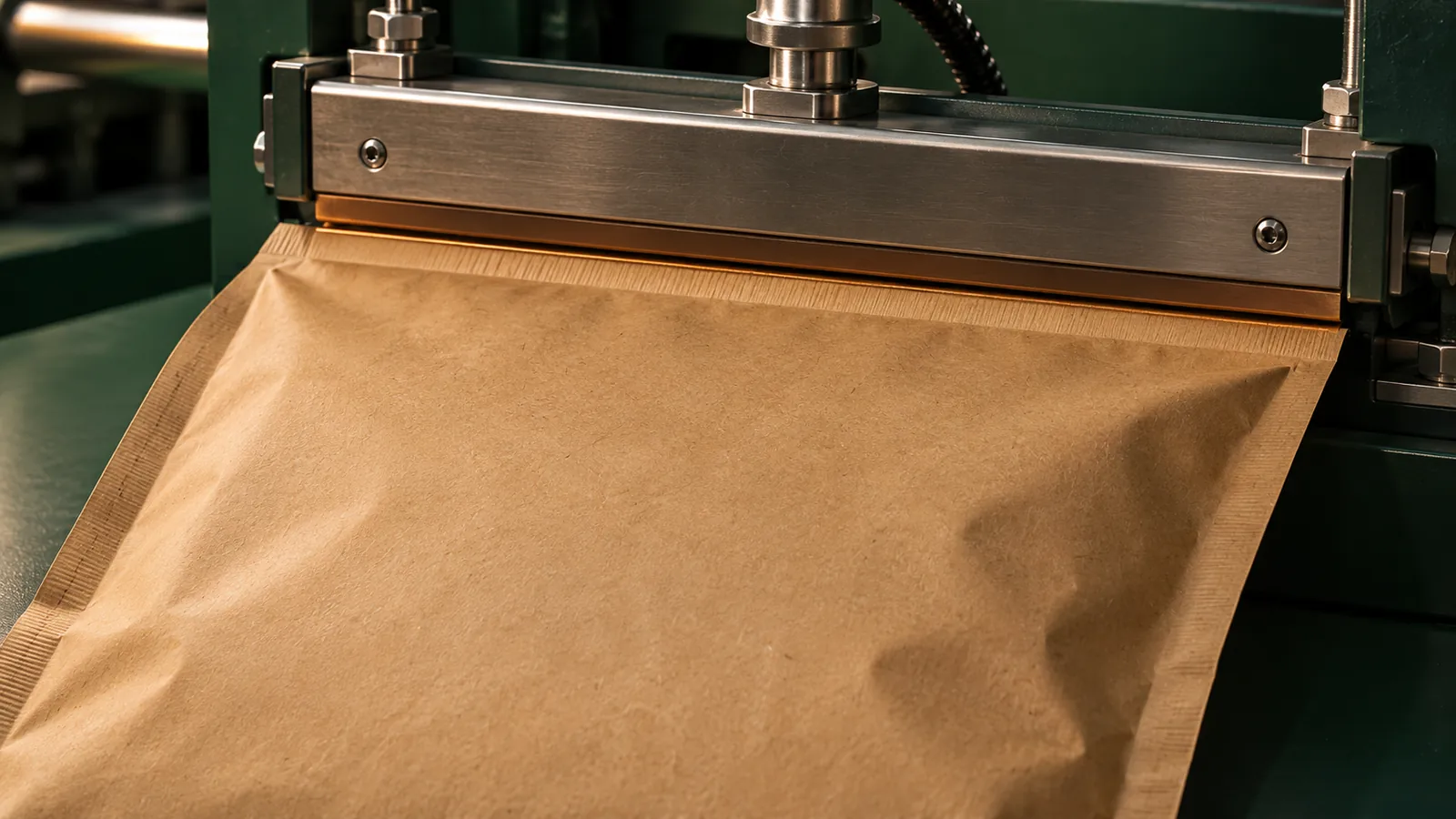
A neat heat seal is only the start of a paper-mailer approval. The paper has to run through the coating and converting process, the seal has to hold under the intended conditions, and the filled mailer has to protect the product on its actual route. These are separate questions. A supplier's recyclability claim is a fourth question, not a substitute for any of the first three.
The issue is timely: on 3 November 2026, Henkel introduced Aquence HS 2819 RE for right-sized paper mailers. Henkel describes a water-based coating applied to paper by a converter, then cut and heat-sealed around a shipment in an automated process. It says accredited institutes confirmed recyclability of its tested solution. Those statements concern Henkel's material and test conditions. They do not certify every kraft grade, coating weight, printed mailer or local collection route.
What changes when a paper mailer is made on demand?
A pre-made envelope arrives with its dimensions and closure already set. A roll-fed format must be coated, printed if needed, cut and sealed reliably across varying package lengths. That brings paper formation, moisture, surface treatment, coating adhesion and machine settings into one converting decision. A useful RFQ therefore specifies the *complete structure and process*, not just "brown kraft paper" or a grammage.
Our kraft paper page describes a paper family that may be relevant when discussing a substrate. It does not mean that every listed grade is already approved for heat-seal coating, mailer manufacture or a specific automated line. Ask for a representative sample and qualify it with the converter and coating supplier.
Approve the seal as a process window, not a single attractive sample
Request a trial at the proposed line speed with the intended paper, coating, print and package dimensions. Record seal-bar temperature, dwell time, pressure, coating application and the acceptable operating range. Inspect seams at startup and after sustained running, including corners and overlaps. Look for weak bonds, paper tear, channel leaks, curl and coating transfer.
The ASTM F88/F88M seal-strength method measures the force required to separate a strip containing a seal and identifies failure mode. It can be a useful agreed method for a suitable flexible structure, but a strip result is not proof that a complete filled mailer will survive a delivery route. Set acceptance limits and sampling with the converter; do not borrow a number from a different paper or machine.
Test the filled package, not just the seam
A mailer that seals well may still puncture, abrade, open at a corner or leave a fragile product unsupported. Trial the actual contents, protective inserts if any, typical and worst-case sizes, and the intended handling route. Agree before testing what counts as damage or an unacceptable opening. If the result requires cushioning, compare the total pack rather than declaring a paper-only replacement successful from the outside appearance.
For a broader decision about pack dimensions and restraint, see our right-sized e-commerce packaging guide and packaging and printing applications. This article focuses specifically on the heat-sealed paper structure and its approval evidence.
Ask for evidence that matches the final structure
Recyclability is not established by the word "paper". Ask who tested the finished, printed and coated construction, which method and mill scenario were used, and whether any adhesive, label, ink or protective layer was included. The 4evergreen Recyclability Evaluation Protocol is one industry framework for evaluating fibre-based packaging; its existence does not make a particular pack recyclable everywhere. Keep market-specific collection and disposal claims separate from technical test results.
Likewise, do not carry over a coating supplier's food-contact statement to a mailer without checking the exact formulation, intended use, jurisdiction and supporting documents. Henkel's announcement describes conditions for its product; it is not a blanket approval for other structures.
A short RFQ that gets a usable answer
Send the converter and paper supplier the product size and weight range, destination, expected handling, required roll width, print coverage, target line speed, planned coating and closure design, volume, and desired recycling market. Request paper samples, coated trial stock, seal-window data, failure modes, a filled-pack test plan and the applicable recycling evidence. Compare offers on approved packed units, not only price per tonne of paper.
If you are evaluating a paper substrate for this application, contact YOUNGSUN PAPER with the proposed structure and machine requirements. We can discuss paper options and samples; coating compatibility, seal performance and finished-mailer claims require trials and documentation from the responsible partners. This article does not imply that YOUNGSUN manufactures Henkel's coating or a finished heat-sealed mailer.
Frequently asked questions
Does kraft paper become heat-sealable on its own?
Not automatically. A converter may apply a compatible heat-seal coating or use a qualified structure. The paper, coating and line settings need to be approved together.
Is a strong seal enough to approve the mailer?
No. Check seam consistency and failure mode, then test the filled mailer on the intended distribution route.
Does a recycling-compatible coating make every mailer recyclable?
No. Evidence must cover the actual finished structure and relevant recycling scenario; local collection rules are a separate consideration.
What should I send with a paper-mailer RFQ?
Share the item dimensions and weight, route, roll and printing requirements, line speed, closure concept, expected volume and target market. Ask for a trial plan and documented acceptance criteria.