
Materials & Packaging · 2026-10-11
Transparent Paper Looks Ready to Replace Plastic—Until Buyers Ask These 7 Questions
Transparent paper can give customers a view of the product while reducing reliance on a plastic window. But optical appeal is only the first approval step. Buyers should validate seven linked performance questions before changing the commercial pack.
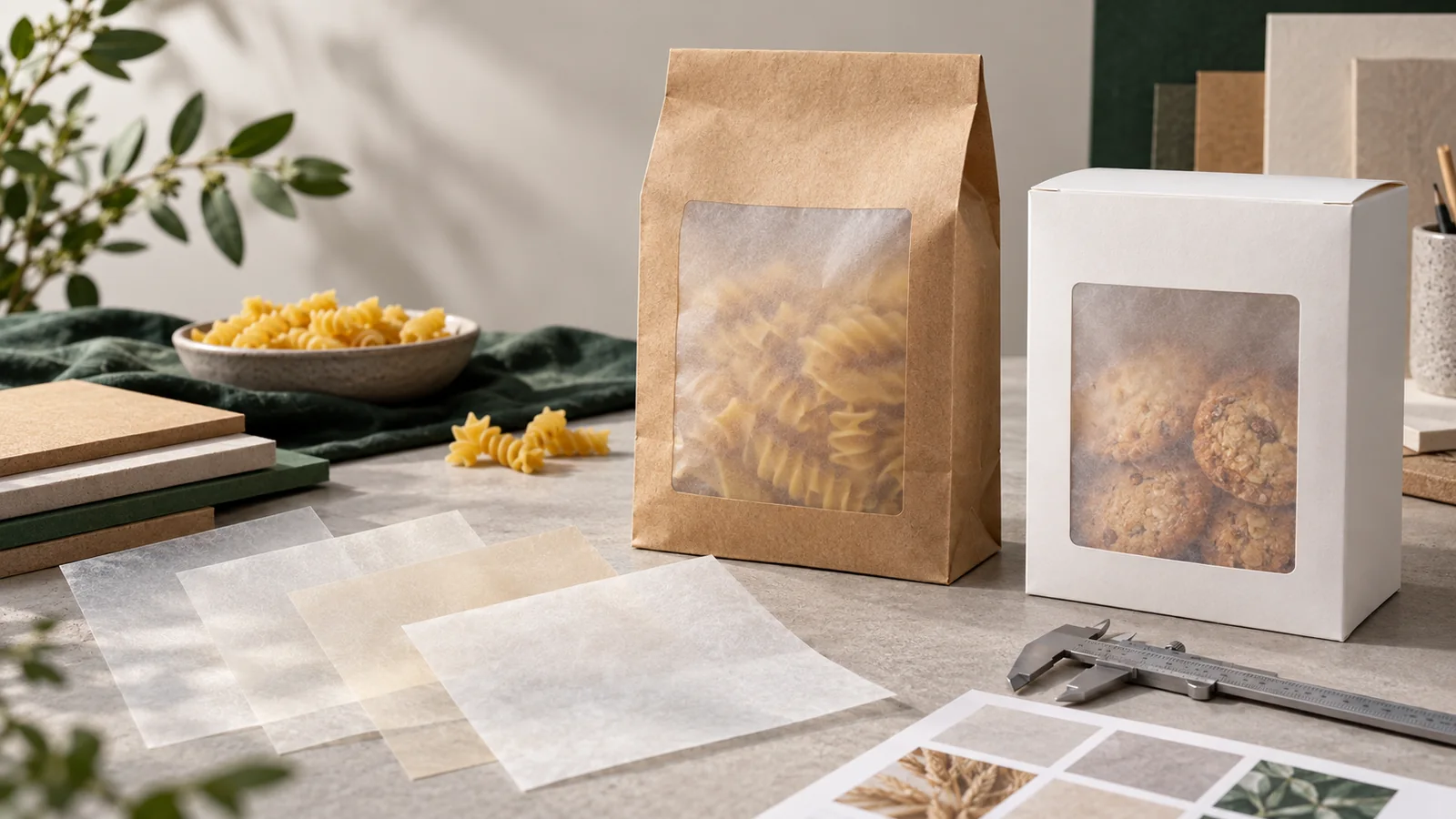
Packaging buyers have a familiar design problem: consumers want to see the product, but a conventional plastic window can complicate a paper-based packaging story. Transparent and translucent fibre materials are creating another option for windows, bags and wraps—especially for dry food, bakery, premium stationery and selected non-food applications.
The subject moved back into the industry spotlight on 8 October 2026, when Packaging Europe announced a technical webinar on transparent paper for visible packaging. Its agenda focuses on transparency, haze, clarity, strength, printability, converting and recyclability. That list is useful because it shows why material selection cannot be reduced to one question: “Can I see through it?”
A transparent paper may look convincing in a hand sample and still fail on the packing line, lose strength in humid storage, provide the wrong barrier or require different end-of-life instructions. Before approving a switch from film, buyers should evaluate the finished packaging system, not only the base sheet.
Here are seven questions to put into the RFQ, sample trial and approval record.
1. How Much Product Visibility Is Actually Required?
Transparency, haze and clarity are related but different optical properties.
- Light transmission describes how much light passes through the material.
- Haze describes how strongly that light is scattered, creating a frosted appearance.
- Clarity affects how sharply an object can be seen through the sheet.
A bakery window may only need to show colour and shape. A premium gift box may need a cleaner, more defined view. A translucent wrap may intentionally soften the product image to create a tactile, high-end presentation.
Do not approve the material from an empty sheet held against a lamp. Place it over the real product, at the real viewing distance, inside the intended carton or bag. Dark products, fine details and printed backgrounds can change the result dramatically.
Ask the supplier to retain an agreed physical sample that defines acceptable visibility. If the application is decorative rather than protective, compare tracing paper options by translucency, surface and folding behaviour instead of treating every translucent sheet as interchangeable.
2. Which Barrier Does the Product Need?
Visibility does not protect the packed product. The required barrier depends on what can damage it: grease, water vapour, liquid water, oxygen, aroma, light or mineral oil migration.
For example, glassine-like dense paper can provide useful grease resistance, but it does not automatically deliver the moisture or oxygen barrier needed for every food. Sappi's technical guidance on switching to paper-based packaging explains that dry products still need application-specific protection and that normal paper, glassine and coated barrier paper serve different functions.
Build the specification from the product outward:
| Packed product condition | Property to confirm |
|---|---|
| Oily bakery or confectionery | Grease resistance and stain control |
| Hygroscopic powder or dry food | Water-vapour barrier and seal integrity |
| Aroma-sensitive product | Aroma and oxygen barrier |
| Refrigerated or frozen product | Condensation, low-temperature flex and wet strength |
| Non-food presentation window | Tear, scuff, light and visual performance |
Request measured values and test conditions where barrier performance is critical. A generic description such as “food paper” or “moisture resistant” is not a production specification.
3. Can It Be Sealed, Glued and Converted on the Intended Equipment?
A paper window can be inserted into a carton, glued into a bag, folded as a wrap or heat-sealed as part of a flexible structure. Each route creates different stresses.
Before mass production, confirm:
- minimum bend radius and fold-crack behaviour;
- machine-direction and cross-direction strength;
- glue compatibility and required application weight;
- heat-seal temperature, dwell time and seal strength where applicable;
- dimensional stability under heat and humidity;
- die-cutting cleanliness and dust generation;
- line speed and web-tension range.
The packaging line trial matters because paper and film do not handle identically. Paper can have higher stiffness, a different coefficient of friction and a narrower sealing window. A small successful hand seal does not prove stable high-speed production.
Run the trial with the final roll width, coating side, printing, adhesive and package geometry. Record the settings and acceptable operating window so repeat orders are not restarted from zero.
4. Will Printing Improve the Pack—or Reduce Visibility?
Transparent fibre materials can support branding, instructions and decorative effects, but ink coverage changes both appearance and converting behaviour. Dense colours reduce product visibility. Heavy ink, varnish or white layers can alter stiffness, sealability and recyclability.
Define three artwork zones:
- Clear viewing area: no print or only a controlled light tint.
- Information area: barcodes, legal text and instructions with verified contrast.
- Brand area: colours and graphics tested on the actual translucent substrate.
Ask the printer to confirm ink adhesion, rub resistance, minimum text size, barcode contrast and whether corona or other surface treatment is required. Approve the printed and converted pack under retail lighting—not only a flat digital proof.
For projects where opacity and photographic colour are more important than visibility, a window may not be the best route. A smooth C2S art board card or folding box board can provide a more predictable print surface while product information is carried by imagery.
5. Does the Finished Structure Meet Food-Contact Requirements?
Food-contact suitability applies to the complete intended use, not to the word “paper.” The substrate, coating, ink, adhesive and converting process may all need supporting documentation. Conditions also matter: direct or indirect contact, dry or fatty food, contact time, temperature and market of sale.
Request declarations and test reports that match:
- the exact material grade and coating;
- the intended food type;
- direct or indirect contact;
- expected temperature and contact duration;
- the destination market;
- printing and adhesive position.
Do not transfer a certificate from one structure to another without written confirmation. A decorative tracing sheet intended for stationery is not automatically suitable as a food-contact window.
For oily or fatty foods, compare the required transparency with the performance of greaseproof paper. The correct material is the one that protects the product throughout its shelf life and distribution—not simply the clearest sheet.
6. Is the Complete Pack Recyclable in the Destination Market?
Paper appearance and fibre content are not enough to prove recyclability. The complete structure must be compatible with collection, sorting and recycling systems, and those systems vary by market.
Cepi's Paper and Board Recyclability Laboratory Test Method Version 3 simulates key stages of a conventional paper recycling mill, including pulping, screening and sheet formation. For a meaningful result, the tested specimen should represent the printed, coated, glued and sealed commercial pack.
In the European Union, Regulation (EU) 2025/40 requires packaging to be designed for material recycling and sets phased recyclability requirements. The official PPWR text also makes clear that integrated components must not hinder recycling of the main packaging body. Buyers should follow the detailed criteria and later implementing rules that apply to their packaging category and date; this article is not legal advice.
Ask these four evidence questions:
- Which test method was used?
- Was the final converted structure tested?
- Which collection and recycling route does the result cover?
- What disposal instruction is valid in each destination market?
A useful example is Mondi's bread packaging with window options: one design used a glassine window intended to be recycled with the paper bag, while another used a detachable film window for separate disposal. The right architecture depends on verified local handling, not appearance alone.
7. Has the Pack Passed a Real Distribution Trial?
Laboratory data narrows the risk, but commercial packaging also experiences filling pressure, vibration, stacking, temperature changes and consumer handling. Transparent zones can be more visually unforgiving: creases, scuffs, trapped dust and adhesive marks remain visible.
Use a staged approval:
- Material screening: optical properties, basis weight and surface.
- Converted prototype: window position, glue line, print and folds.
- Packing-line trial: speed, tension, sealing and reject rate.
- Distribution trial: compression, vibration, humidity and temperature.
- Shelf review: appearance, product protection and consumer opening.
- End-of-life review: disposal instruction and supporting evidence.
Keep one signed reference pack and record the paper grade, lot, coating side, printer, adhesive and machine settings. That file becomes the control point for repeat orders and supplier changes.
Transparent Paper Packaging RFQ Checklist
Send suppliers the same complete brief so proposals can be compared fairly:
- package format, dimensions and visible-window area;
- packed product, contact type and shelf-life target;
- required clarity, haze or approved visual reference;
- grease, moisture, oxygen, aroma and light requirements;
- paper GSM, thickness and roll or sheet format;
- printing coverage, ink and varnish system;
- glue or heat-seal method and target line speed;
- storage and distribution conditions;
- food-contact documents required for the destination market;
- recyclability test evidence and intended disposal instruction;
- prototype, line trial and signed-master-sample requirements.
Our food and beverage paper solutions can help buyers map product protection, converting and documentation before selecting a paper grade.
What This Week's Transparent-Paper Discussion Really Means
Transparent paper is not simply a cosmetic substitute for film. It is a packaging material with its own balance of visibility, fibre character, strength, barrier, sealing and recovery behaviour. That balance can create a distinctive pack, but only when the buyer defines the application before choosing the sheet.
The practical question is not “Is transparent paper sustainable?” It is: which finished structure gives the required view, protects the product, runs reliably and has evidence for the intended end-of-life route?
To evaluate a visible paper window, wrap or bag, send YOUNGSUN PAPER the product, package format, barrier need, printing method, quantity and destination market. We can help organise suitable material samples for print and converting trials; final compliance and recyclability claims should be confirmed for the completed pack and target market.
Frequently Asked Questions
Is Transparent Paper the Same as Tracing Paper?
No. Tracing paper is a broad translucent paper category commonly used for design, overlays and specialty applications. Packaging-grade transparent paper may require different strength, barrier, sealing, food-contact and recyclability performance.
Can Transparent Paper Replace a Plastic Window?
Sometimes. Suitability depends on required visibility, product protection, conversion method, packing-line performance and the end-of-life route. A real production and distribution trial is essential.
Is Glassine Moisture-Proof?
Glassine is dense and can offer grease resistance, but it should not be assumed to provide the water-vapour or oxygen barrier required for every food. Confirm measured performance for the exact grade.
How Should Buyers Verify Recyclability?
Request evidence for the finished printed and converted structure, identify the test method, and confirm that the result and disposal instruction apply in the destination market.