
Packaging · 2026-07-05
Food Packaging Paper: A Practical Buyer Guide for Cups, Wraps and Grease-Resistant Packaging
Food packaging paper must match the application, barrier needs, converting process and destination market requirements.
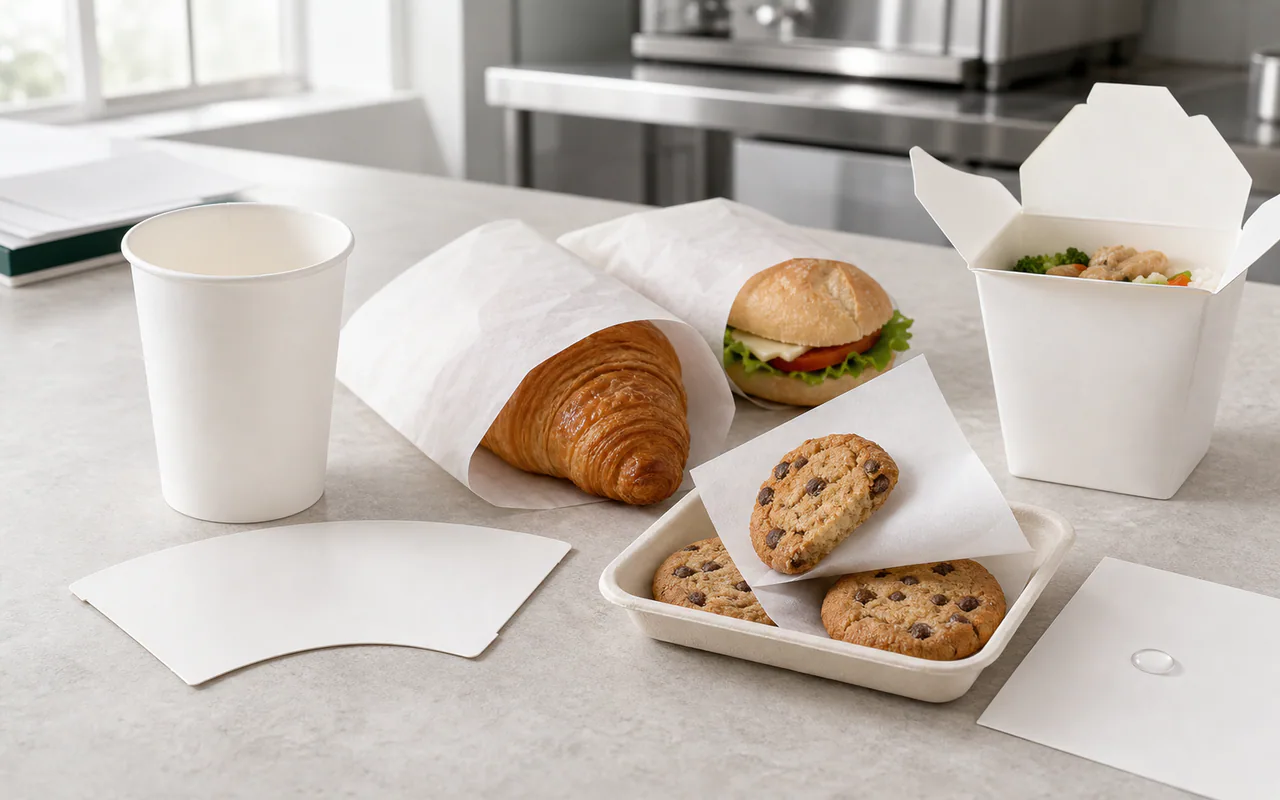
Food packaging paper must do more than look clean. It needs to protect food, run well on converting equipment, match the final application and meet the documentation requirements of the destination market.
For buyers of cups, wraps, bakery bags, tray liners and takeaway packaging, choosing the right paper grade is an important sourcing decision.
Main Types of Food Packaging Paper
Food packaging paper covers several different product types. The most common include:
- Cup paper
- Greaseproof paper
- Silicone coated paper
- PE coated paper
- Kraft food packaging paper
- Tray liner paper
- Bakery wrapping paper
Each type has a different function. Cup paper needs stiffness and coating compatibility. Greaseproof paper needs oil resistance. Silicone coated paper needs release performance. PE coated paper needs moisture resistance and heat-sealing properties.
Cup Paper
Cup paper is used for paper cups and beverage packaging. It usually needs good stiffness, smooth surface quality and compatibility with barrier coating.
Important points for cup paper buyers:
- GSM and stiffness
- Roll width or sheet size
- Coating compatibility
- Printing surface
- Cup forming performance
- Heat-sealing requirements
- Food-contact documentation
Cup paper may be coated with PE or other barrier systems depending on the final cup design and market requirements.
Greaseproof Paper
Greaseproof paper is used for foods that contain oil or fat. It is common in bakery packaging, burger wrapping, sandwich paper, fries bags and tray liners.
Choose greaseproof paper when you need:
- Oil and grease resistance
- Clean food presentation
- Wrapping flexibility
- Bakery or fast-food use
- Printing or branding options
Buyers should test grease resistance with the actual food product, temperature and holding time.
Silicone Coated Paper
Silicone coated paper provides a release surface. It is used for baking, adhesive backing, release liners and some food-related applications.
Choose silicone coated paper when you need:
- Non-stick surface
- Release performance
- Baking or liner use
- One-side or two-side coating options
- Stable converting behavior
Release performance can vary by coating weight, paper base and end use, so sample testing is important.
PE Coated Paper
PE coated paper is paper laminated with polyethylene to improve moisture resistance and heat sealing. It is widely used for paper cups, takeaway packaging and disposable food packaging.
Choose PE coated paper when you need:
- Moisture resistance
- Liquid barrier support
- Heat sealing
- Cup stock
- Food service packaging
Buyers should confirm coating side, coating weight, base paper GSM and sealing performance before ordering.
Compliance and Documentation
Food packaging requirements vary by destination market and application. Buyers should confirm which documents are needed for the final use and region.
Common buyer requests may include:
- Food-contact declaration
- Test reports
- Material specification sheet
- Certificate of origin
- Production batch information
- Packaging and labeling documents
This article is a sourcing guide, not legal advice. For regulated food-contact packaging, confirm applicable requirements with qualified compliance partners and the final market’s rules.
Sourcing Checklist
Before requesting a quote, prepare:
- Paper type
- GSM
- Roll width or sheet size
- Coating type and side
- Quantity
- Food type or application
- Printing requirements
- Destination country
- Required certificates or reports
- Target delivery schedule
The more complete your specification, the faster your supplier can recommend a grade, prepare samples and quote accurately.
Conclusion
Food packaging paper is application-specific. Cup paper, greaseproof paper, silicone coated paper and PE coated paper each solve different packaging problems. Choosing the right grade requires attention to barrier needs, converting process, food type and documentation.
For buyers, sample testing is the safest step before bulk orders. Test the paper with real food, real machines and real packing conditions.
FAQ
What paper is used for paper cups?
Cup paper is commonly used for paper cups. It is often paired with a barrier coating depending on the final cup design.
What is greaseproof paper used for?
Greaseproof paper is used for oily or fatty foods such as bakery goods, burgers, fries, sandwiches and tray liners.
What is silicone coated paper?
Silicone coated paper has a release surface and is used for baking, liners, adhesive backing and specialty converting.
Is PE coated paper suitable for food packaging?
PE coated paper is widely used in food service packaging, but buyers should confirm the required documentation for the destination market and final application.