
Design · 2026-07-24
Paper Surface Finishing: The Complete Guide to Gloss, Matt, Soft-Touch, UV, and Foil
Surface finishing transforms ordinary paper into premium packaging. This guide compares gloss lamination, matt lamination, soft-touch coating, spot UV, foil stamping, and embossing — cost, performance, and when to use each.
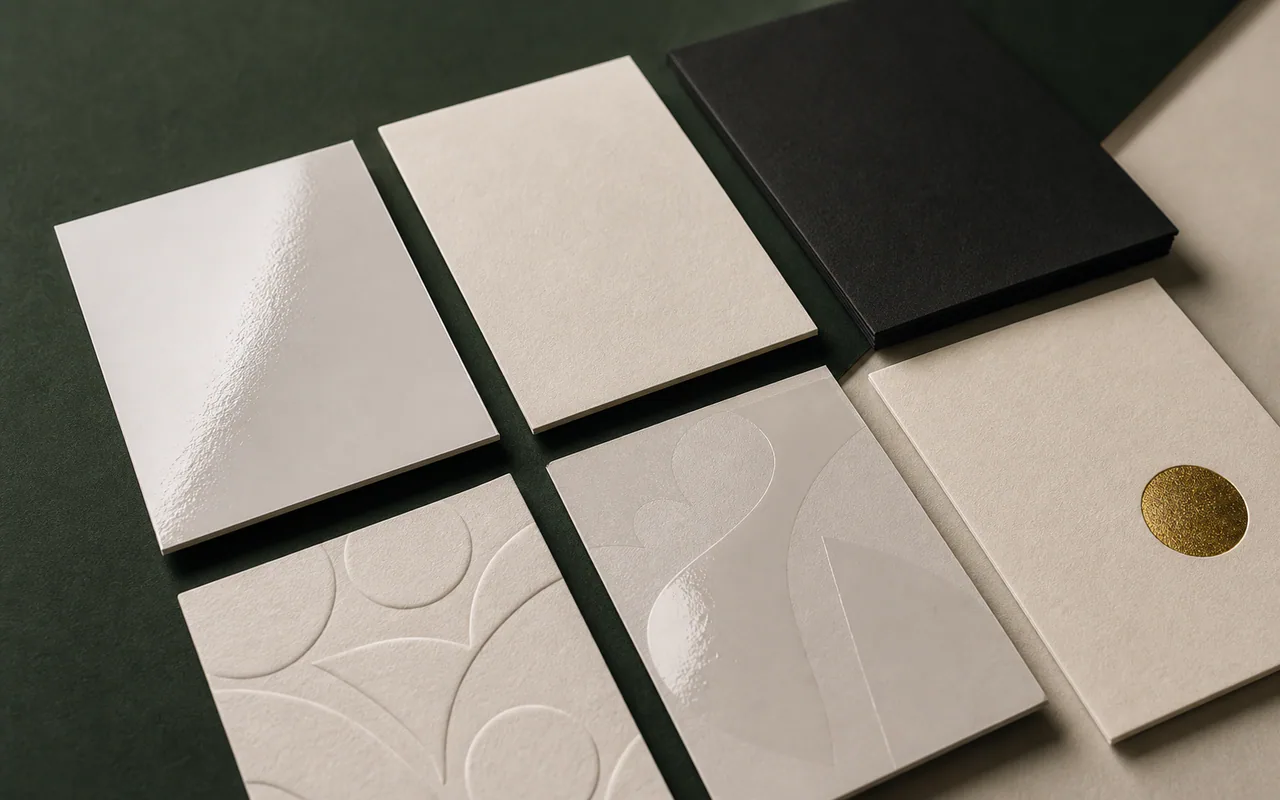
Paper surface finishing is the difference between a box that says "budget" and one that says "luxury." Two sheets of the same 300 gsm C2S art board can look and feel completely different depending on whether they're gloss laminated, matt laminated, or soft-touch coated.
This guide compares the six most common surface finishing techniques for paper and board packaging — their cost, performance, best applications, and limitations.
The Six Finishing Techniques at a Glance
| Finish | Look | Touch | Relative Cost | Durability |
|---|---|---|---|---|
| Gloss lamination | Shiny, reflective | Smooth, slippery | $ | ★★★★★ |
| Matt lamination | Flat, understated | Smooth, warm | $ | ★★★★☆ |
| Soft-touch coating | Deep matte | Velvet, tactile | $$ | ★★★☆☆ |
| Spot UV | Gloss on matt contrast | Textured contrast | $$ | ★★★☆☆ |
| Hot foil stamping | Metallic, reflective | Smooth, premium | $$ | ★★★★☆ |
| Blind embossing | Subtle, 3D | Raised texture | $$ | ★★★☆☆ |
Gloss Lamination
A clear glossy plastic film (typically 25–30 micron BOPP) thermally bonded to the paper surface.
Pros:
- Maximum color saturation — colors pop
- Excellent scuff and moisture resistance
- Wipe-clean surface (important for food and cosmetics packaging)
- Lowest cost among lamination options
Cons:
- Can look "cheap" or mass-market if overused
- Fingerprints visible
- Glare makes photography difficult (e-commerce product shots)
Best for: Mass-market retail packaging, food cartons, magazine covers, children's books
Cost: $0.03–0.06 per A4 sheet (varies by volume)
Matt Lamination
Same process as gloss but with a matte-finish film.
Pros:
- Elegant, understated appearance
- No glare — photographs beautifully
- Softer hand-feel than gloss
- Good scuff resistance
Cons:
- Slightly more expensive than gloss
- Can show scuff marks more visibly than gloss on dark colors
- Darker, less vibrant colors than gloss
Best for: Premium retail packaging, luxury catalogs, corporate brochures, book covers
Cost: $0.04–0.08 per A4 sheet
Soft-Touch Coating
A specialty aqueous or UV coating that creates a velvet-smooth, matte surface with a distinctive tactile feel.
Pros:
- Unique tactile experience — people want to touch it
- Deepens blacks and enriches colors
- Fingerprint resistant (unlike gloss)
- Premium, contemporary luxury feel
Cons:
- More expensive than standard lamination
- Less scratch-resistant than gloss/matt lamination
- Oil from fingers can leave marks on some formulations
- Not suitable for high-abrasion applications
Best for: Luxury cosmetics, premium hang tags, high-end business cards, gift boxes
Cost: $0.08–0.15 per A4 sheet
YOUNGSUN option: Soft Touch Paper — pre-coated at the mill, eliminating the need for post-print coating.
Spot UV Varnish
A high-gloss UV-cured varnish applied to selected areas only, creating contrast between gloss and matt zones on the same surface.
Pros:
- Creates visual drama — gloss areas "pop" against matt background
- Can highlight logos, product names, or design elements
- Adds perceived value without full-surface coating cost
- Works on both coated and uncoated papers
Cons:
- Requires precise registration (adds setup cost)
- Registration errors visible (misaligned UV is obvious)
- Less protective than full-surface lamination
Best for: Premium packaging, brochure covers, presentation folders, business cards
Cost: $0.06–0.12 per A4 sheet (setup cost additional)
Hot Foil Stamping
A heated die presses metallic or pigmented foil onto the paper surface, bonding it under heat and pressure.
Pros:
- Unmatched luxury perception — metallic foil communicates premium instantly
- Available in gold, silver, copper, rose gold, holographic, and pigmented foils
- Works on dark papers where ink would be invisible
- Permanent — won't fade, scratch, or peel
Cons:
- Most expensive finishing technique
- Custom die required (one-time cost: $80–200)
- Fine detail can fill in or lose definition
- Not suitable for large solid areas (foil may wrinkle)
Best for: Luxury packaging, wine labels, certificate covers, wedding invitations, brand logos
Gold foil on black paper is the classic luxury packaging combination.
Cost: Die: $80–200 one-time. Per impression: $0.03–0.10 depending on foil type and coverage area.
Blind Embossing/Debossing
A die presses the paper into a raised (embossed) or recessed (debossed) design — without ink, foil, or coating.
Pros:
- Ultimate understated luxury — no color, just texture
- Works on any paper type
- Communicates craftsmanship and attention to detail
- Can be combined with foil stamping (foil emboss)
Cons:
- Die cost (one-time)
- Very fine detail may not reproduce cleanly
- Deep embossing on thin paper may cause cracking
- Less visible in flat lighting (needs side light to see)
Best for: Luxury letterhead, certificate covers, premium hang tags, book covers
Cost: Die: $100–250 one-time. Per impression: $0.04–0.12.
Combining Finishes
The most sophisticated packaging often combines multiple finishing techniques:
| Combination | Effect | Example |
|---|---|---|
| Matt lam + Spot UV | Matt surface with gloss highlights | Premium brochure cover |
| Soft-touch + Gold foil | Velvet surface with metallic logo | Luxury cosmetics box |
| Matt lam + Blind deboss | Flat surface with recessed texture | High-end stationery |
| Gloss lam + Spot UV | Maximum gloss with even more gloss contrast | Magazine special edition |
How to Choose
``` What is your priority? ├─ Maximum durability → Gloss lamination ├─ Elegant, understated → Matt lamination ├─ Tactile luxury → Soft-touch coating ├─ Attention to specific elements → Spot UV ├─ Metallic luxury → Hot foil stamping └─ Texture without color → Blind embossing ```
Practical Tips
- Always test on the actual production stock. A finish that looks perfect on coated board may behave differently on uncoated paper.
- Consider the full production chain. Will the finished piece be glued, folded, die-cut AFTER finishing? Some coatings can interfere with glue adhesion.
- Think about the end-user experience. A high-gloss black box shows every fingerprint. A soft-touch box feels amazing but may scuff in a retail bag.
- Budget for dies and setup. Foil stamping and embossing have one-time die costs. Amortize over your print run.
- Sustainability consideration. Lamination films make paper harder to recycle. If sustainability is a brand priority, consider aqueous or UV coatings instead of plastic film lamination.
Conclusion
Surface finishing is not an afterthought — it's a primary design decision that affects how your packaging looks, feels, performs, and is perceived. A $0.05 lamination upgrade can make $1 of paper and printing look like $5 worth of packaging.
Contact us to discuss finishing options for your paper order — we can supply paper matched to your finishing requirements or coordinate finishing services as part of your order.