
Packaging · 2026-07-03
How to Choose the Right Paperboard for Your Packaging Project
Different packaging projects require different paperboard. This guide explains how to choose by structure, printing, surface, food contact and cost.
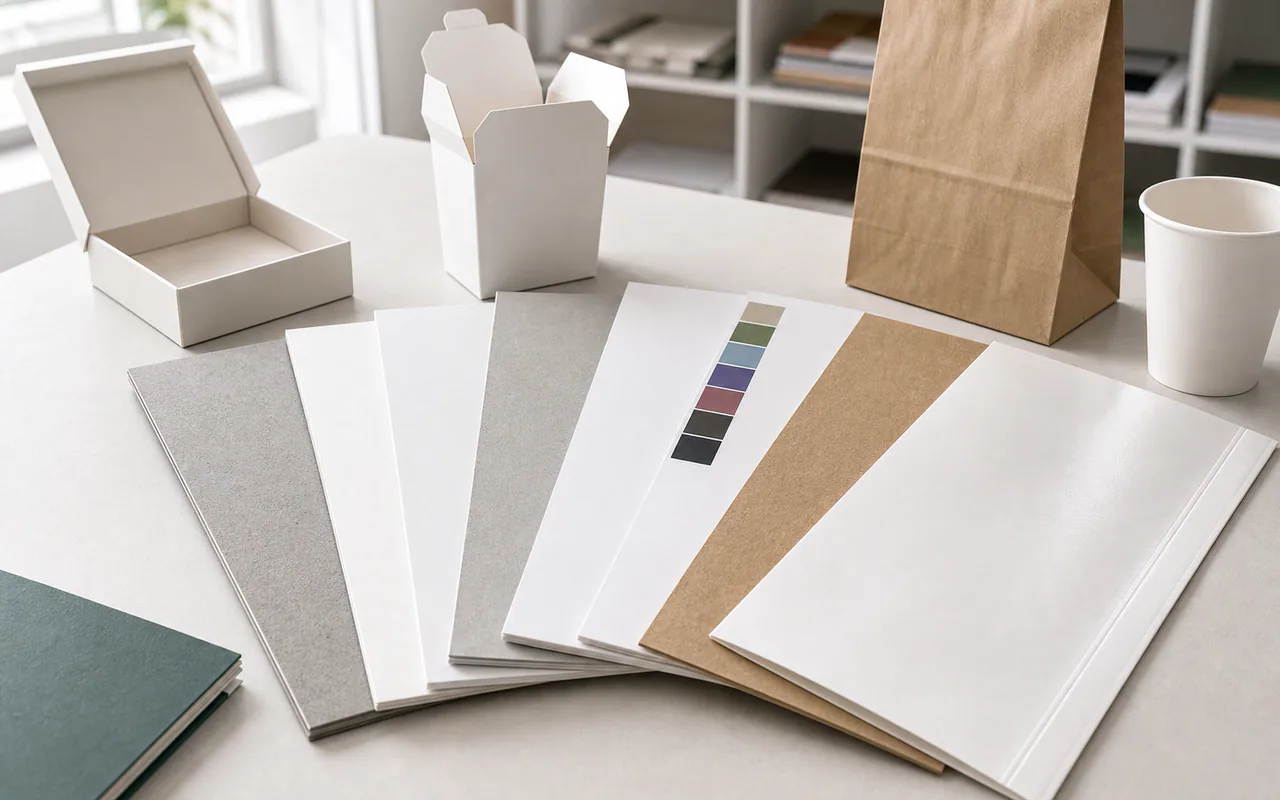
Choosing paperboard is not only a price decision. The right board affects print quality, folding strength, box structure, shelf appearance, shipping protection and the customer’s first impression of a product.
For packaging buyers, the most important question is simple: what does the finished package need to do?
Some packages need to look premium. Some need to protect weight. Some need to fold cleanly at high speed. Some need moisture resistance. Some need food-contact suitability. The right paperboard depends on the final application.
Start With the Packaging Type
Before comparing paper grades, define the packaging format:
- Rigid box
- Folding carton
- Paper bag
- Display card
- Sleeve
- Tag or insert
- Food cup or takeaway packaging
- Book cover or folder
Each format has different requirements. A rigid gift box usually needs grey board as a structural base. A retail carton usually needs folding box board or duplex board. A high-end printed card may need C2S art board. A paper bag may need kraft paper.
Grey Board for Rigid Structure
Grey board is suitable when the packaging needs thickness and structure. It is commonly used for rigid boxes, book covers, folders, puzzles and premium packaging bases.
Choose grey board when you need:
- High stiffness
- Stable thickness
- Good mounting or wrapping performance
- Cost-effective structure
- Recycled fiber options
Grey board is usually not the best choice for direct high-quality color printing. It is often covered with printed paper, fancy paper, leatherette paper or other decorative material.
Folding Box Board for Retail Cartons
Folding box board, often called FBB, is widely used for retail boxes. It normally has a good printing surface and folding performance, making it suitable for cosmetics, healthcare products, food cartons and consumer goods packaging.
Choose folding box board when you need:
- Clean printing surface
- Good folding strength
- Retail carton appearance
- Lightweight but stable packaging
- Better shelf presentation
FBB is a strong option when the package must be printed, creased, folded and glued efficiently.
Duplex Board for Cost-Effective Printed Packaging
Duplex board usually has a coated white top side and grey back. It is commonly used for cartons, display packaging, backing boards and general printed packaging.
Choose duplex board when you need:
- Printable coated surface
- Economical carton board
- Good stiffness for the price
- Retail or industrial packaging use
It is often a practical choice for large-volume packaging where cost control matters.
C2S Art Board for Premium Printing
C2S art board card has coated surfaces on both sides, giving it strong print quality and a refined appearance. It is suitable for premium cards, covers, sleeves, catalogues and high-quality packaging inserts.
Choose C2S art board when you need:
- High-quality color printing
- Smooth coated surface
- Premium finish
- Printing on both sides
- Display cards or packaging sleeves
It is often used where visual quality is more important than heavy structural strength.
Kraft Paper for Natural and Strong Packaging
Kraft paper is known for strength and a natural appearance. It is widely used for paper bags, wrapping, envelopes, liners and eco-style packaging.
Choose kraft paper when you need:
- Natural brown or white kraft appearance
- High tear strength
- Recyclable packaging feel
- Bags, wrapping or liners
- Sustainable brand positioning
Kraft paper works well for brands that want a simple, natural and durable packaging style.
PE Coated Paper for Barrier Requirements
PE coated paper has a polyethylene coating that improves moisture resistance and heat-sealing performance. It is commonly used for paper cups, food packaging and disposable packaging.
Choose PE coated paper when you need:
- Moisture resistance
- Heat-seal ability
- Cup stock
- Food service packaging
- Liquid or grease barrier support
For food-contact applications, buyers should always confirm the required compliance documents for the target market.
Practical Buyer Checklist
Before placing an order, confirm:
- Product application
- GSM or thickness
- Roll or sheet format
- Sheet size or roll width
- Printing method
- Surface finish
- Certification requirements
- Packing method
- Destination port
- Quantity and delivery schedule
Samples are important. A board that looks good on a data sheet still needs to run well on your printing, die cutting, folding or box-making line.
Conclusion
The best paperboard is the one that matches the finished package. Grey board gives structure. Folding box board supports retail cartons. Duplex board balances printability and cost. C2S art board improves premium printing. Kraft paper adds natural strength. PE coated paper supports barrier packaging.
When sourcing paperboard, share the final use, size, quantity, printing method and destination with your supplier. A clear specification leads to better samples, faster quotation and fewer production problems.
FAQ
What is the best board for rigid boxes?
Grey board is commonly used as the structural base for rigid boxes.
What board is best for printed retail cartons?
Folding box board or duplex board is commonly used for printed retail cartons.
Is kraft paper suitable for luxury packaging?
Yes. Kraft paper can be used for natural, minimalist and eco-style luxury packaging.
When should I choose PE coated paper?
Choose PE coated paper when moisture resistance, heat sealing or cup stock performance is required.