
Packaging Procurement · 2026-11-07
Linerboard Prices Rose. Why Doesn't Your Box Quote Match?
Recent US linerboard data show why a raw-material index and the price of a finished corrugated box can move differently. Here is a practical quote-comparison brief.
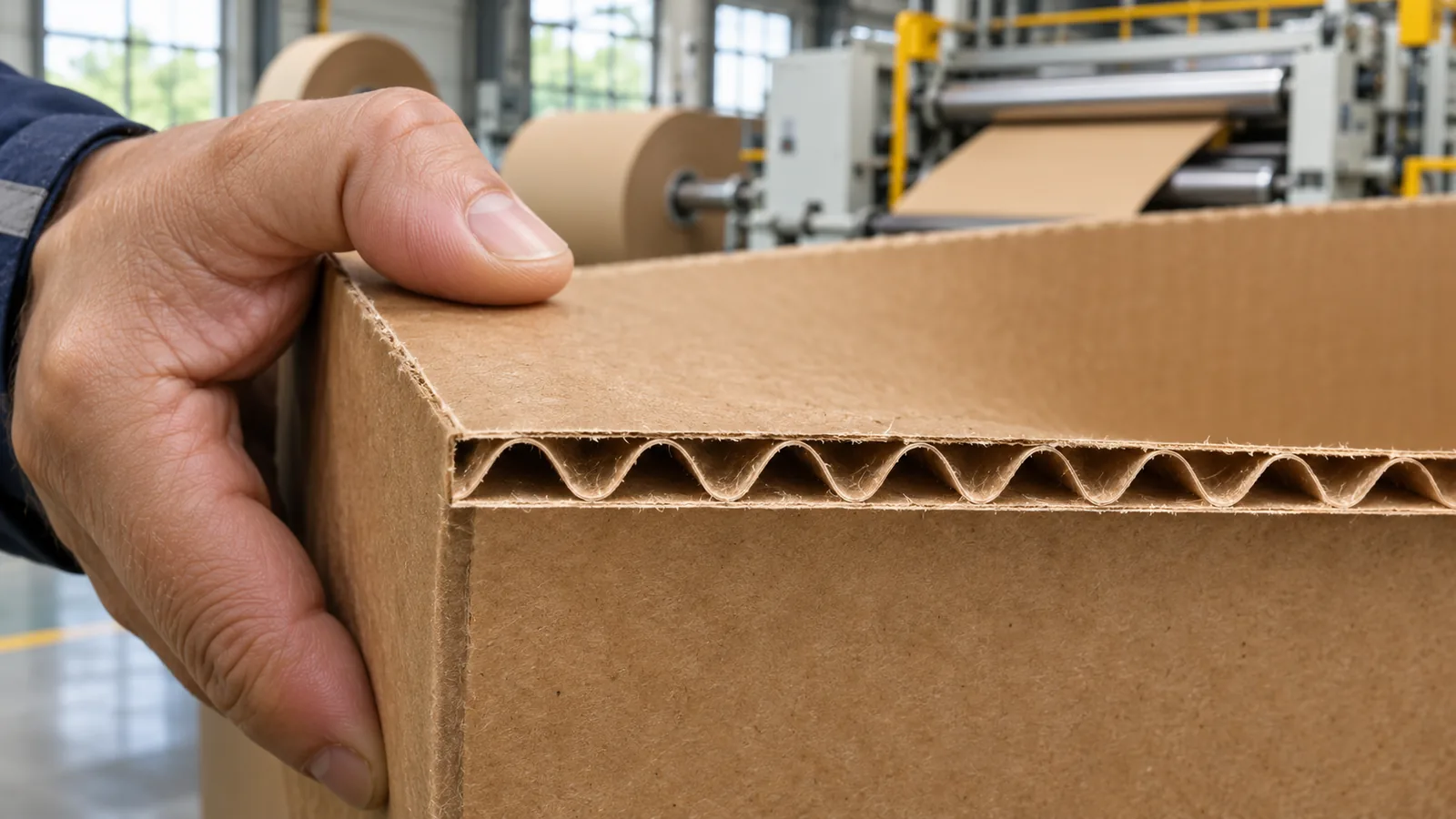
A linerboard price is a material-market signal, not the price of a finished corrugated box. The difference matters when a supplier cites an index to justify a change in a box quotation. The buyer needs to establish which grade, structure, conversion work and delivery terms the quote actually covers.
The question is timely. In a 3 November 2026 analysis of the US market, Fastmarkets reported that its domestic open-market price for 42-lb kraftliner had risen by $170 per US short ton year to date through September. It estimated underlying cost inflation near $100 per ton over that period. These are Fastmarkets' US-market figures, not a global price, a forecast, or a YOUNGSUN quotation. The American Forest & Paper Association's Q3 report also found a US containerboard operating rate above 94.5% for a second consecutive quarter. Neither source tells you what a particular converted box should cost.
First, identify the product behind the index
Linerboard is one of the flat facings of corrugated board. Fluting is the wavy middle layer; a finished box also depends on board assembly, printing, die-cutting, folding, gluing and delivery. A 42-lb kraftliner assessment applies to a defined US grade and transaction basis. It is not interchangeable with a quote for a complete box, a different region, a metric tonne, or an unrelated paper grade.
Do not confuse kraftliner with any brown kraft paper used for bags or wrapping. Do not treat grey board, duplex board or package board as corrugated linerboard either. These materials can serve other packaging roles, but their names alone do not establish equivalence to a corrugated transport box.
Ask what changed in the finished-box specification
Before comparing a revised quote with an earlier one, request the same specification on both documents:
| Quote field | Why it matters |
|---|---|
| Box style and internal dimensions | Changes blank area, yield and fit around the product. |
| Board construction | Number of walls, flute profile, liner and medium grades affect material use and protection. |
| Material basis and units | A US short-ton index cannot be inserted directly into a metric-tonne or per-box price. |
| Print and finishing | Artwork coverage, ink, die-cutting and finishing add conversion steps. |
| Order size and acceptable waste | Setup and trim can change cost per accepted box. |
| Delivery basis and destination | Freight, duties and handling may be outside the quoted factory price. |
| Effective date and validity | Clarifies which market period and currency the supplier used. |
If the supplier proposes a lighter or different board, keep the comparison at cost per accepted, protective box, not cost per tonne of paper. A lower material weight can help, but only when the assembled package continues to meet the product's distribution needs.
Make the price bridge visible
Ask the converter for a simple bridge between the old and new finished-box price: material change, converting change, freight change, currency or tax effect, and any specification revision. The supplier may not disclose every input cost, but should be able to state which assumptions changed. If an index is used, record its exact grade, geography, unit, date, contract clause and pass-through formula. Do not assume the full index movement is automatically passed through to every box.
Fastmarkets' figures illustrate the point: its US linerboard market price and estimated underlying costs moved at different rates. That does not prove a particular supplier's margin rose, nor justify a uniform surcharge in another market. It is a reason to request a comparable scope and evidence, not a reason to reject every increase.
Validate any redesign with the packed product
An edge-crush or burst figure can help describe a board, but it does not by itself prove that the packed product will arrive undamaged. The International Safe Transit Association (ISTA) distinguishes material or box-construction requirements from performance testing of the complete packaged product. Agree on the relevant route, handling hazards and acceptance criteria with the converter, then trial the proposed box with the actual product. If the specification changes, document whether a new test is needed.
For a retail carton inside a transport shipper, specify the two layers separately. A folding box board carton may need print and crease approval; the corrugated outer box needs transport protection. Our packaging and printing applications show where those requirements meet, but one material should not be substituted for another just because both are called paperboard.
A brief that produces comparable offers
Send each supplier the same packed-product weight, box dimensions, destination, shipping route, print artwork, annual and order quantities, target delivery terms and current approved construction. Ask for the proposed board specification, price per finished box, quotation validity, sample or trial plan, and which changes would trigger reapproval. For other paper components such as bags, wraps or retail cartons, quote them as separate line items.
If you need paper materials for those components, contact YOUNGSUN with the grade, dimensions, application and destination. We can discuss the paper options in our catalogue; this article does not state that YOUNGSUN supplies the US kraftliner grade in the Fastmarkets assessment or complete corrugated shippers.
Frequently asked questions
Does a $170-per-ton linerboard increase mean my box price must rise by the same amount?
No. That figure describes a particular US linerboard market through September 2026. A box quote includes its own material mix, conversion, yield and delivery terms.
Is brown kraft paper the same as kraftliner?
Not necessarily. Kraftliner is a specified facing for corrugated board. Confirm the exact grade and intended application before comparing it with bag or wrapping paper.
Can a lighter corrugated board lower my unit cost?
Possibly, but approve it against the complete packed product, shipping route and acceptance criteria. Lower grammage alone is not proof of equal protection.
Should I use a US price index for an export quote?
Only if the contract clearly defines that benchmark and its conversion into your quote. Check geography, unit, date, currency, grade and delivery basis.