
Packaging · 2026-08-05
Kraft Paper vs Virgin Pulp Paper: Which Is Right for Your Packaging Project?
Kraft paper and virgin pulp paper serve different purposes in packaging and printing. This comparison covers strength, appearance, cost, sustainability credentials, and how to choose between them for bags, wraps, cartons, and commercial print.
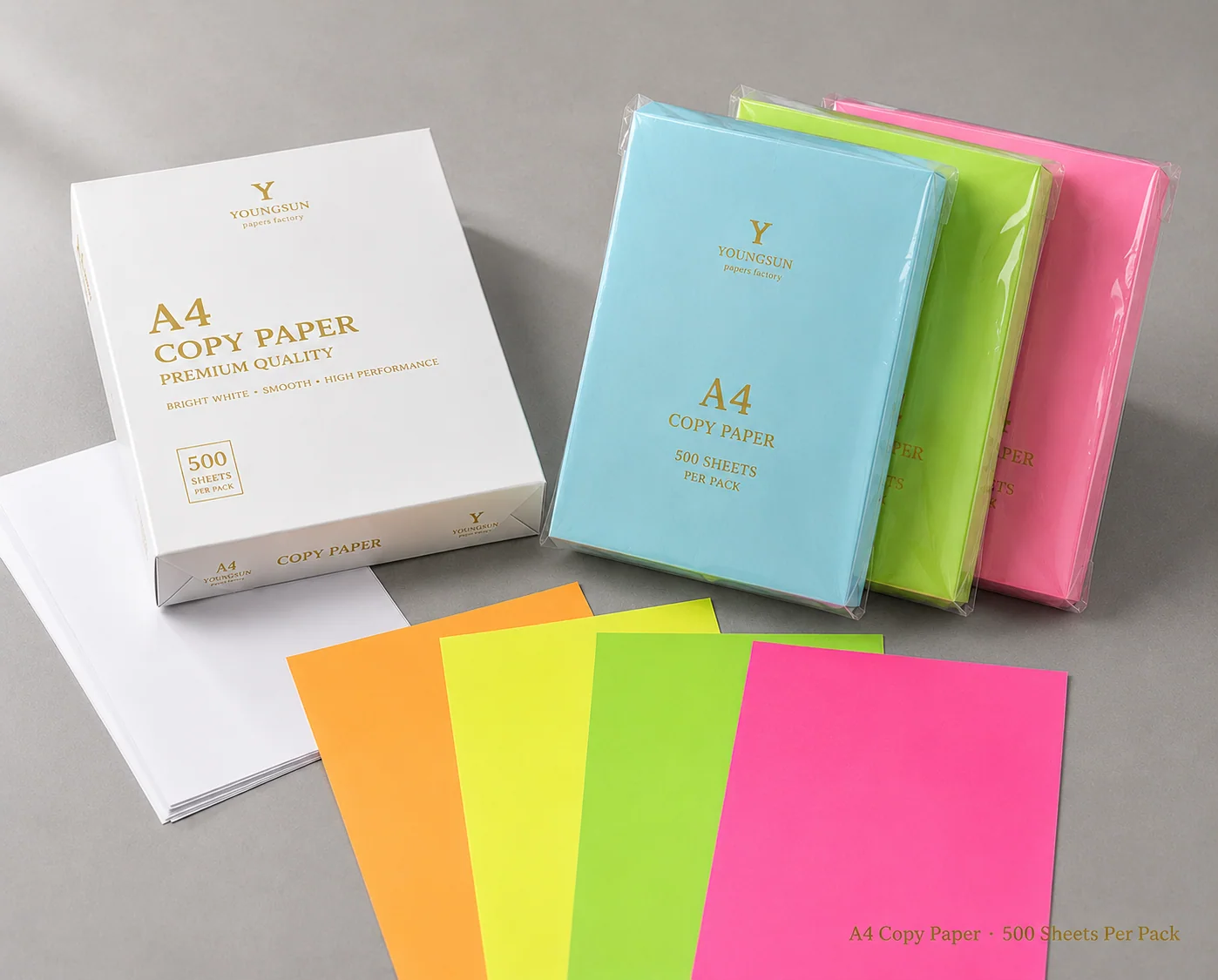
One of the most fundamental choices in paper packaging procurement is between kraft paper and virgin pulp paper — two broad categories that cover the majority of paper and board products sourced internationally.
Kraft paper — with its distinctive natural brown color and high tear strength — communicates sustainability, simplicity, and durability. Virgin pulp papers — brighter, smoother, and more printable — deliver the clean surface and consistent performance required for premium printing and branded packaging.
But the choice is not simply aesthetic. These two paper families differ in fiber composition, strength properties, printing behavior, cost structure, sustainability profile, and converting performance. Choosing the right one — or knowing when to use both in combination — can make the difference between packaging that performs and packaging that disappoints.
What Is Kraft Paper?
Kraft paper is produced through the kraft (sulphate) pulping process, which uses sodium hydroxide and sodium sulphide to separate lignin from cellulose fibers. The kraft process produces stronger fibers than mechanical pulping because it preserves more of the fiber length.
Kraft paper is characterized by:
- High tear and tensile strength — The strongest common paper grade relative to its weight
- Natural brown color — Unbleached kraft retains the brown color of the wood lignin residues
- Coarse surface texture — Less smooth than bleached papers
- Excellent converting durability — Resists tearing during bag forming, wrapping, and handling
Kraft paper is available in:
- Natural brown kraft — Unbleached, traditional kraft appearance
- Bleached white kraft — Bleached for a cleaner appearance while retaining kraft strength
- Recycled kraft — Made from recovered kraft fiber (OCC — old corrugated containers)
What Is Virgin Pulp Paper?
"Virgin pulp paper" is a broad category encompassing paper grades made from first-use wood fiber (never previously made into paper). The fiber may come from the kraft, sulphite, mechanical, or chemi-thermomechanical (CTMP) pulping process.
Common virgin pulp papers include:
- Woodfree paper — Uncoated, high-brightness paper for books, notebooks, commercial printing
- Folding box board (FBB) — Multi-layer carton board with mechanical pulp middle
- C2S art paper — Double-coated premium printing paper
- Cupstock board — Virgin-fibre board for paper cups
Virgin pulp papers are characterized by:
- Higher brightness and whiteness — Especially bleached chemical pulp grades
- Smoother surface — Better print reproduction, especially for halftone and process color
- More consistent formation — Uniform fiber distribution for predictable printing and converting
- Wider range of finishes — Coated, calendered, embossed, and specialty finishes available
Side-by-Side Comparison
| Property | Kraft Paper | Virgin Pulp Paper (e.g., Woodfree) |
|---|---|---|
| Fiber source | Virgin softwood (typically pine/spruce) via kraft process; recycled kraft available | Virgin chemical or mechanical pulp (various wood species) |
| Strength | Highest tear and tensile strength per GSM | Moderate to high depending on grade |
| Appearance | Brown (natural) or white (bleached); coarse texture | White/cream; smooth surface |
| Brightness | Low (20–40% ISO for natural; 75–82% for bleached) | High (85–98% ISO) |
| Printability | Accepts simple flexo/offset; not ideal for high-quality process color | Excellent offset, flexo, digital, and gravure printing |
| Cost per ton | Lower (simpler process, unbleached options) | Higher (more refining, bleaching, coating) |
| Sustainability signal | Strong — natural brown kraft is visually associated with eco-friendly packaging | Variable — depends on certification and fiber source |
| Recyclability | Excellent — widely recycled in OCC stream | Excellent — widely recycled in mixed paper stream |
| Biodegradability | Naturally biodegradable | Naturally biodegradable |
| Common GSMs | 35–200 GSM | 60–400 GSM ( | Common forms | Rolls, sheets, bags | Sheets, reels |
When to Choose Kraft Paper
Choose kraft paper when your packaging priorities are:
1. Strength and Durability
Kraft paper is the strongest common paper grade per unit weight. For paper shopping bags, industrial sacks, wrapping that must resist tearing, and packaging subject to rough handling, kraft is the material of choice.
Typical applications:
- Paper shopping bags
- Industrial sacks (cement, chemicals, animal feed)
- Protective wrapping and interleaving
- Envelopes and mailers
- Corrugated liner and medium
2. Natural / Eco Brand Positioning
Natural brown kraft paper has become a powerful visual shorthand for sustainability, simplicity, and environmental responsibility. Brands in food, fashion, organic products, handmade goods, and eco-conscious consumer segments choose kraft specifically for its visual message.
Typical applications:
- Eco-branded retail bags
- Artisanal bakery packaging
- Natural cosmetics packaging
- Sustainable fashion hang tags and packaging inserts
- Organic food wrapping
3. Cost-Sensitive Applications
Natural kraft paper is typically more economical per ton than bleached virgin pulp papers because it skips the bleaching and brightening stages. For volume packaging applications where print quality is secondary to function, kraft offers the best strength-to-cost ratio.
4. Industrial and Utility Packaging
Where packaging is functional — not decorative — kraft is the standard choice. It performs reliably in automated bagging, wrapping, and palletizing systems.
When to Choose Virgin Pulp Paper
Choose virgin pulp paper when your packaging priorities are:
1. Print Quality
If the packaging surface must reproduce brand colors accurately, show photographic images, or carry fine text and detail, virgin pulp paper — especially coated grades like C2S art board or FBB — is the standard choice.
Typical applications:
- Cosmetics and fragrance cartons
- Pharmaceutical packaging with fine print
- Branded retail cartons with photographic images
- Catalogs, brochures, and premium print
2. Brightness and Whiteness
For brands whose identity depends on clean, bright whites (medical, premium skincare, minimalist luxury), bleached virgin pulp papers provide the highest brightness levels (90%+ ISO).
3. Consistent Surface for Converting
High-speed carton forming, precise die-cutting, and tight-register printing all benefit from the uniform surface and formation of virgin pulp papers.
4. Food Contact (with Compliance)
For food-contact applications requiring specific compliance documentation (FDA, EU 1935/2004), virgin pulp papers are widely used because the fiber source and manufacturing process are well-documented. Kraft paper can also be used for food contact — especially for dry foods, bakery, and produce — but buyers must confirm the grade is manufactured to food-contact standards.
Using Kraft and Virgin Pulp Together
Many packaging projects use both kraft and virgin pulp papers in complementary roles:
- Kraft outer bag + virgin pulp printed insert card — A natural kraft paper bag with a brightly printed C2S insert card combines eco-positioning with premium brand communication.
- Virgin pulp printed carton + kraft inner wrap — A high-quality printed retail carton with kraft tissue or kraft paper inner wrapping combines shelf appeal with product protection.
- Kraft box exterior + virgin pulp printed label — A kraft-finish rigid box with a C2S printed label or sticker combines texture with crisp branding.
- Grey board structural base + kraft wrapping — A rigid box made from grey board and wrapped with kraft paper for a natural, sturdy finish.
This combination approach lets you use each material where its properties are strongest — and avoid paying for properties you don't need everywhere.
Sustainability: Kraft vs Virgin Pulp
Both kraft and virgin pulp papers can be sustainable choices — but the sustainability case is different for each:
Kraft Paper Sustainability
- Fiber source: Typically softwood (pine, spruce) from managed forests. FSC certification available.
- Recycled content: Recycled kraft (from OCC) is widely available for brown grades.
- Bleaching: Natural kraft is unbleached — no chlorine or bleaching chemicals.
- Visual signal: The brown color itself communicates "eco-friendly" to consumers, even before any label or certification is read.
Virgin Pulp Paper Sustainability
- Fiber source: Can be FSC 100% certified virgin fiber from responsibly managed forests.
- Bleaching: Modern mills use ECF (elemental chlorine-free) or TCF (totally chlorine-free) bleaching.
- Recycled content: Virgin pulp papers can include post-consumer recycled content in some grades, but by definition they contain a significant proportion of first-use fiber.
- Performance efficiency: Higher stiffness per GSM means less material weight for the same carton performance — a sustainability advantage that is measured in logistics efficiency, not just fiber source.
Neither is automatically "better" for the environment. The sustainable choice depends on the specific grade, fiber source, certification, manufacturing process, transport distance, and end-of-life pathway. FSC certification is the most reliable indicator for both kraft and virgin pulp papers.
Cost Comparison
On a per-ton basis, natural kraft paper is generally less expensive than virgin pulp papers of equivalent GSM. However, per-ton cost is not the whole story:
- Kraft paper may be used at a lighter GSM due to its higher strength, reducing total tonnage for a given number of bags or wraps.
- Virgin pulp paper may command a higher price for the finished packaging because of its superior print quality and premium appearance.
For buyers, the right comparison is total packaging cost per unit — not cost per ton of paper.
How to Choose: A Decision Framework
Ask these questions to decide between kraft and virgin pulp paper:
- What is the primary function: Strength/durability or print/brand appearance?
- What printing method and quality level is required?
- What is the brand positioning: Natural/eco or premium/refined?
- Is the packaging subject to rough handling or moisture?
- What certification (FSC, food-contact, etc.) is required?
- What is the target cost per finished unit?
- Will the packaging be visible to the end consumer (retail) or functional (industrial)?
FAQ
Is kraft paper stronger than regular paper?
Yes. Kraft paper has significantly higher tear resistance and tensile strength than most other paper grades at equivalent GSM due to the kraft pulping process, which preserves longer fibers.
Can kraft paper be printed in full color?
Kraft paper can be printed, but the natural brown background reduces color accuracy and contrast compared to white papers. Flexographic printing with opaque inks works well; full-color offset on natural kraft is challenging. For vibrant color printing, bleached white kraft or virgin pulp papers are better choices.
Is kraft paper always brown?
Natural (unbleached) kraft paper is brown. Bleached kraft paper is white or cream. Both are available.
Is virgin pulp paper more sustainable than kraft?
Not necessarily. Both can be sustainable when FSC certified and sourced responsibly. Natural kraft avoids bleaching chemicals; virgin pulp papers can offer higher stiffness per GSM (less material for the same performance). The specific certification, fiber source, and manufacturing process matter more than the general category.
Which is cheaper — kraft or virgin pulp paper?
Natural kraft paper is generally less expensive per ton than virgin pulp paper. However, total packaging cost depends on GSM, converting, and the value of the finished product.
Can kraft paper be used for food packaging?
Yes. Kraft paper is widely used for food bags, bakery wrapping, produce packaging, and dry food packaging. For food-contact applications, confirm the grade is manufactured to the required food-safety standard for your target market.
Related Products and Guides
- Kraft Paper — natural & bleached packaging grades
- Woodfree Paper — uncoated virgin pulp printing paper
- Folding Box Board — virgin fiber carton board
- C2S Art Board — coated premium printing board
- Grey Board — FSC Recycled structural board
- Duplex Board — cost-effective carton board
- All Products & Categories
- Grey Board vs Duplex Board — Complete Comparison