
Products · 2026-07-24
PE Coated vs Greaseproof vs Silicone Paper: Which Barrier Paper Should You Choose?
PE coated, greaseproof, and silicone coated paper each solve different barrier problems. This comparison guide explains the differences and helps you choose the right paper for your food packaging application.
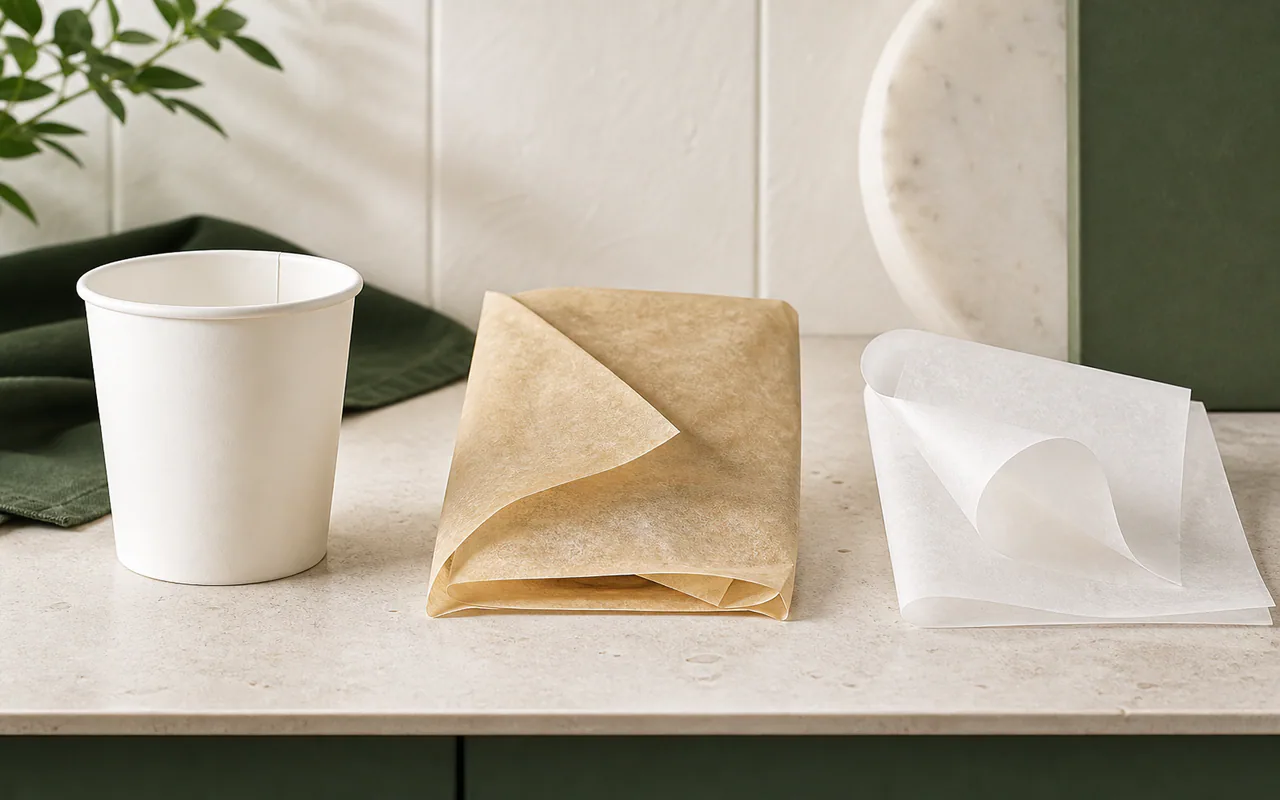
All three papers provide a barrier — but the mechanism, performance, and appropriate applications are completely different. Using the wrong one means packaging that leaks, sticks, or fails regulatory compliance.
This guide explains what each paper does, how it works, and when to use it.
The Three Barrier Papers at a Glance
| Property | PE Coated Paper | Greaseproof Paper | Silicone Coated Paper |
|---|---|---|---|
| Barrier type | Moisture & liquid (PE film) | Oil & grease (dense fiber) | Non-stick release (silicone) |
| How it works | Polyethylene layer blocks liquids | Dense fiber structure blocks oil penetration | Silicone coating prevents adhesion |
| KIT rating | N/A (moisture barrier) | KIT 6–8+ | N/A (release function) |
| Heat resistance | PE melts at ~110°C / 230°F | Up to 180°C / 356°F | Up to 220°C / 428°F |
| Heat sealable | ✅ Yes | ❌ No | ❌ No |
| Printable | ✅ Yes (flexo, offset) | ✅ Yes (flexo recommended) | ⚠️ Limited |
| PFAS-free | ✅ Yes (PE is PFAS-free) | ✅ Yes (mechanical, no chemicals) | ✅ Yes |
| Recyclability | Difficult (plastic layer) | Recyclable in paper stream | Difficult (silicone layer) |
| Cost level | $ | $ | $$ |
PE Coated Paper: The Moisture & Liquid Barrier
PE coated paper is paper or board extrusion-coated with polyethylene on one or both sides.
How it works: The PE layer is a physical film that water, oil, and liquids cannot penetrate.
Best for:
- Paper cups (hot and cold drinks) — the standard barrier layer for cupstock
- Takeaway food containers — prevents sauce and liquid leakage
- Moisture-resistant wraps — protects contents from external humidity
- Frozen food packaging — barrier against freezer burn and moisture
Key advantage: Heat-sealable. PE melts and bonds to itself under heat, forming leak-proof seams on cups and containers.
Limitation: PE melts at ~110°C. Not suitable for oven use. The plastic layer makes recycling more difficult.
PE coating options:
- Single-side PE: Barrier on inside of cup/container
- Double-side PE: Barrier on both sides (hot drink cups — protects against external condensation)
Greaseproof Paper: The Oil & Grease Barrier
Greaseproof paper achieves oil resistance through mechanical fiber refining — not chemical coating.
How it works: During papermaking, fibers are heavily refined (beaten) to create a dense, closed sheet structure. The tiny gaps between fibers are smaller than oil molecules, so grease cannot penetrate.
Best for:
- Burger and sandwich wraps
- Bakery wrapping (pastries, bread, croissants)
- Fried food liners and baskets
- Tray liners for food service
- Food interleaving (cheese slices, meat patties)
Key advantage: PFAS-free by design. No chemicals needed — the barrier is mechanical. Acceptable for direct food contact in all major markets (FDA, EU, GB).
Limitation: Grease-resistant, not waterproof. Prolonged contact with watery foods (soups, sauces) will eventually penetrate. Not heat-sealable.
KIT rating guide:
- KIT 5–6: Dry or low-fat foods (bread, pastries, cookies)
- KIT 7–8: Moderate-fat foods (burgers, sandwiches, fried chicken)
- KIT 9+: High-fat foods (fries, oily snacks, cheese)
YOUNGSUN standard: KIT 6+ (white or natural). Higher KIT ratings available on request.
Silicone Coated Paper: The Non-Stick Release Liner
Silicone coated paper has a layer of silicone applied to one or both sides, creating a surface that nothing sticks to.
How it works: Silicone is chemically non-stick. Food, adhesive, or any substance peels away cleanly from the surface.
Best for:
- Baking paper / parchment — cookies slide off, no oil needed
- Food wrapping for sticky products (caramel, dried fruit, cheese)
- Release liners for adhesive labels and tapes
- Industrial release applications
Key advantage: Heat resistant to 220°C (428°F). Can go in the oven. Reusable — depending on application, the same sheet can be used multiple times.
Limitation: Does NOT provide grease or moisture barrier — it only provides release. More expensive than greaseproof or PE coated paper.
Decision Flowchart
``` What does your packaging need to do? ├─ Hold hot/cold liquids → PE Coated Paper (cupstock) ├─ Wrap oily/greasy foods → Greaseproof Paper ├─ Prevent food from sticking, oven use → Silicone Coated Paper ├─ Heat-seal into cups/containers → PE Coated Paper ├─ Wrapping dry/low-fat food, eco-brand → Greaseproof Paper (natural) └─ High-heat baking, non-stick → Silicone Coated Paper ```
Can You Combine Them?
Sometimes one barrier isn't enough. Common combinations:
| Need | Solution |
|---|---|
| Grease barrier + heat seal | Greaseproof paper + PE coating on one side |
| Moisture barrier + non-stick | PE coated paper + silicone on food-contact side |
| Grease barrier + printable surface | White greaseproof paper (flexo printed) |
Regulatory Considerations
| Regulation | PE Coated | Greaseproof | Silicone |
|---|---|---|---|
| FDA 21 CFR 176.170 | ✅ | ✅ | ✅ |
| EU 1935/2004 | ✅ | ✅ | ✅ |
| GB 9685 (China) | ✅ | ✅ | ✅ |
| PFAS-free | ✅ | ✅ | ✅ |
Important: Compliance documentation must match the final product configuration (base paper + coating). Always request documentation that covers the complete product, not just the base paper.
The Bottom Line
PE coated paper = liquid barrier. Greaseproof paper = oil barrier. Silicone coated paper = non-stick release. Choose based on what you're protecting against — moisture, grease, or adhesion.
Still not sure? Contact our technical team with your food type, packaging format, and target market. We'll recommend the right paper and provide samples for testing.