
Barrier & Food Packaging · 2026-10-21
A Starch Barrier Passed Part 1—What Still Has to Be Proven?
A new starch-based paper packaging structure has passed Part 1 recyclability testing, but that result answers only one part of a commercial approval. This checklist shows what food-packaging buyers should verify next.
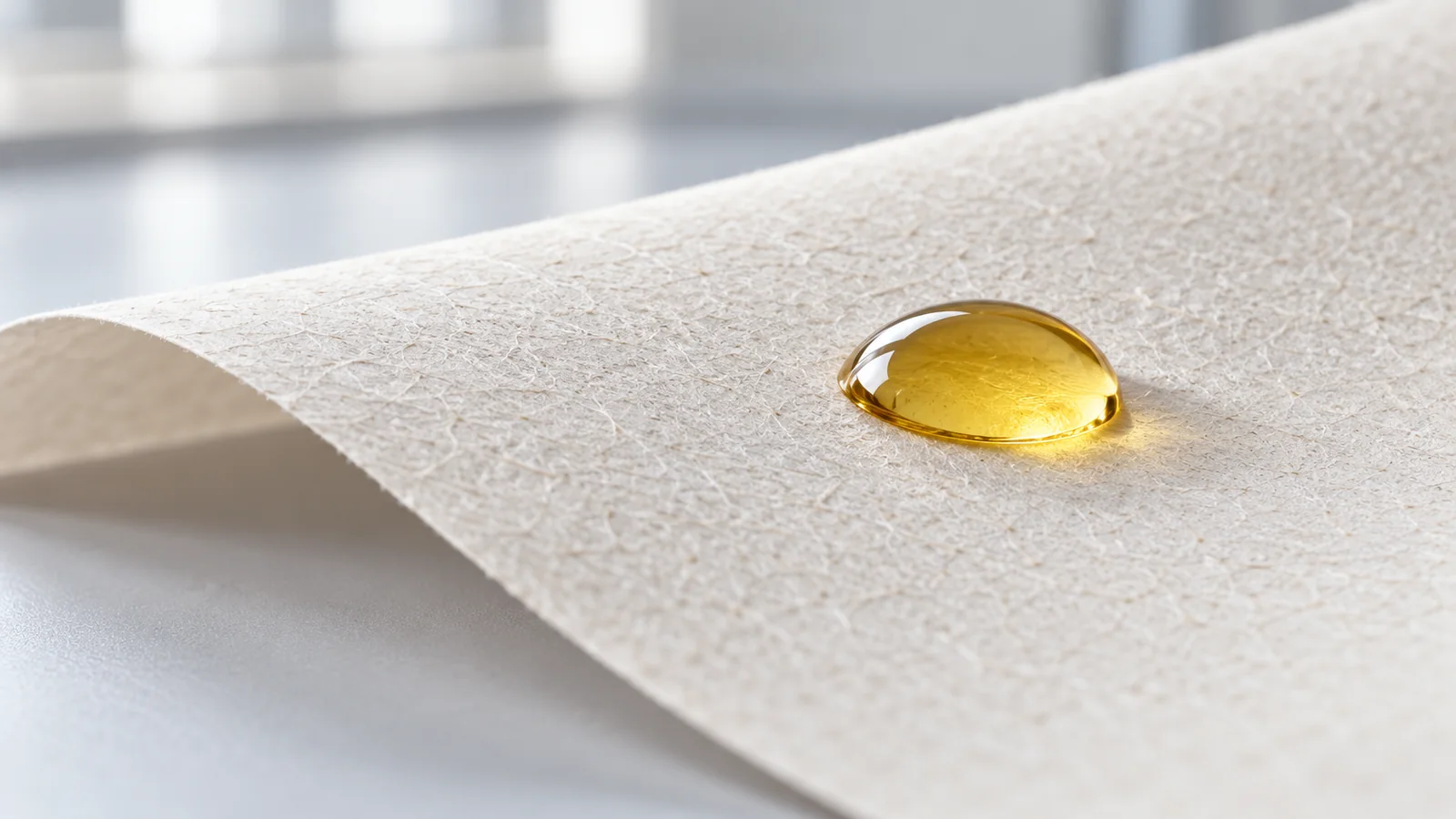
A paper structure can pass an initial recyclability test and still need substantial work before it is ready to wrap a greasy, heat-sealed food product at commercial speed.
That distinction matters after UPM, Ingredion and Paramelt announced a co-developed paper-based packaging structure on 20 October 2026. According to the UPM announcement, the project combines paper substrates, a plant-based starch barrier and bio-based heat-seal or barrier coating expertise. A structure based on UPM Solide Lucent 78 gsm passed Part 1 recyclability testing at Western Michigan University.
This is meaningful development evidence. It is not, by itself, proof that every starch-coated structure is recyclable, food-contact compliant or suitable for every product and packing line. The useful buyer question is: what must the exact commercial structure prove next?
What the Announcement Does and Does Not Establish
The release identifies two papers used in the development work: UPM Solide Lucent 78 gsm and UPM Asendo 65 gsm. It specifically says that a co-created structure based on the 78 gsm grade passed Part 1 recyclability testing.
It does not publish a universal grease-barrier value, heat-seal window, shelf-life result, food-contact migration result or Part 2 result for every structure. Buyers should preserve that distinction when writing specifications or sustainability claims.
| Published point | What a buyer should request next |
|---|---|
| Plant-based starch barrier technology was evaluated | Exact coating identity, coat weight and application side |
| Bio-based heat-seal and barrier expertise was included | Seal temperature, dwell time, pressure and line-speed window |
| One 78 gsm structure passed Part 1 recyclability testing | Exact tested construction, report, protocol and scope |
| Food-packaging applications are targeted | Product-specific barrier, food-contact and shelf-life evidence |
1. Freeze the Complete Layer Structure
Do not approve “starch-coated paper” as a complete specification. Record every layer in order:
- base paper grade and grammage;
- starch barrier type and dry coat weight;
- heat-seal coating or lacquer;
- primer, tie layer or surface treatment;
- printing ink and overprint varnish;
- application side for each coating;
- total grammage and thickness;
- finished package seams, folds and closures.
The recyclability or barrier result belongs to the tested construction. A change in coating supplier, coat weight, varnish, adhesive or printing coverage may create a different structure that needs review.
2. Test Grease Resistance With the Real Food
Starch chemistry may improve oil and grease resistance, but a generic barrier statement does not define performance for a buyer's food.
Set the test around the actual application:
- fat type and temperature;
- contact time and shelf life;
- flat area, fold, crease and sealed edge;
- dry, humid, chilled or heated storage;
- printed and unprinted areas;
- acceptable staining, penetration or loss of strength.
A laboratory grease kit rating can be useful for screening, but it should be followed by testing with the real food or a justified simulant. Hot fried food, bakery fat and room-temperature snacks can challenge a paper structure in different ways.
3. Define the Heat-Seal Operating Window
Passing a recycling test does not show whether the structure seals reliably on the buyer's machine. Request a trial that records:
- minimum and maximum jaw temperature;
- dwell time, pressure and line speed;
- seal strength and failure mode;
- hot tack where the package is loaded immediately;
- performance with crumbs, oil or powder near the seal;
- seal integrity after storage and transport simulation.
The best result is not the highest laboratory seal strength. It is a stable operating window that tolerates normal production variation without scorching the paper, blocking on the reel or slowing the line.
4. Add the Barrier the Product Actually Needs
Grease resistance may be only one requirement. Depending on the food, the structure may also need control of:
- water vapour transmission;
- liquid water or condensation;
- oxygen and aroma transfer;
- mineral oil migration from secondary packaging;
- light exposure;
- stiffness and puncture resistance.
Do not add every possible barrier “for safety.” Unnecessary layers can increase cost and complicate recycling. Start with the product's failure mode and build only the performance needed to reach the intended shelf life.
5. Validate Printing and Converting
A coating can change surface energy, ink holdout, drying, friction, curl and fold behaviour. Run trials using the intended print and converting route.
Check:
- ink adhesion and rub resistance;
- colour density and dot gain;
- coating pickup or damage during printing;
- cracking at folds and creases;
- curl after coating and conditioning;
- reel blocking, web tension and static;
- cutting, forming and glue compatibility.
For buyers comparing greaseproof paper, cup paper or other food-packaging papers, the base sheet and the final converted structure should be evaluated separately.
6. Confirm Food-Contact Evidence for the Finished Structure
Food-contact suitability cannot be inferred from the word “plant-based.” Request documentation for the exact base paper, coating, ink, adhesive and intended conditions of use.
The approval file should identify:
- destination market;
- direct or indirect food contact;
- food type;
- contact temperature and duration;
- applicable test conditions and simulants;
- migration or declaration documents;
- responsible supplier for each layer;
- revision date and traceable product code.
The converter or brand owner should confirm the final package, because combining individually documented materials can introduce new conditions at seams, printed areas or high coat weights.
7. Read “Part 1” Literally
Western Michigan University's recycling facility can perform benchtop and pilot-scale fibre recycling work. Its description of a two-part certification protocol explains that a benchtop procedure can be followed by pilot-plant testing when the first stage passes.
The UPM release states that the starch-based structure passed Part 1. It does not publish a completed Part 2 result in that announcement. A buyer should therefore ask:
- What exact sample was tested?
- Which test protocol and version were used?
- What does Part 1 cover in that protocol?
- What result, score or observations were recorded?
- Is further pilot-scale or market-specific testing planned?
- Does the result cover the printed and sealed commercial pack?
For European projects, the Cepi Recyclability Laboratory Test Method Part I emulates key stages in a conventional paper recycling mill and is used with the 4evergreen evaluation protocol. A result under one method should not be presented as if it were automatically equivalent to every national collection or assessment system.
8. Control the Move From Sample to Production
A successful development sample can change during scale-up. Put these controls into the purchase and quality agreement:
- approved supplier and grade for every layer;
- coat-weight target and tolerance;
- moisture, Cobb, grease and seal test frequency;
- change-notification requirement;
- retained sample from each production lot;
- traceability between paper, coating and converted pack;
- reapproval triggers after material or process changes.
This converts a promising concept into a repeatable commercial specification.
RFQ Checklist for a Starch-Barrier Paper Project
Send suppliers and converters the same brief:
- food product, fat level and filling temperature;
- package format and target shelf life;
- paper grade, GSM, thickness and format;
- required grease, moisture and other barrier targets;
- print process and ink coverage;
- forming, folding, sealing and packing speed;
- destination market and food-contact conditions;
- requested recyclability method and documentation;
- annual quantity, trial quantity and launch date;
- acceptance tests for the trial and production lots.
YOUNGSUN PAPER can help buyers compare base-paper options and prepare samples for converting trials. Standard samples are free; international courier charges are paid by the customer. Send the application, structure and test targets to our paper team, or review our food-packaging paper range.
Frequently Asked Questions
Does a starch coating automatically make paper packaging recyclable?
No. Recyclability depends on the complete structure, coating amount, other non-fibre components, test method and target recycling system. Test the exact commercial construction.
Does passing Part 1 mean the package is commercially approved?
No. It is useful recyclability evidence for the tested sample, but commercial approval can also require barrier, heat-seal, converting, food-contact, shelf-life and additional recycling evidence.
Is a plant-based barrier automatically safe for direct food contact?
No. Origin does not replace food-contact assessment. Verify the exact formulation, intended food, temperature, contact time and destination-market requirements.
Which paper should be used under a starch barrier?
The base paper should match strength, surface, porosity, coating holdout, printing and converting needs. Select it together with the coating system and end-use tests rather than by GSM alone.