
Packaging · 2026-07-07
Why Grey Board Is the Backbone of Premium Rigid Packaging
Grey board is one of the most practical structural materials for rigid packaging, bookbinding and display products. Here is what buyers should know before sourcing it.
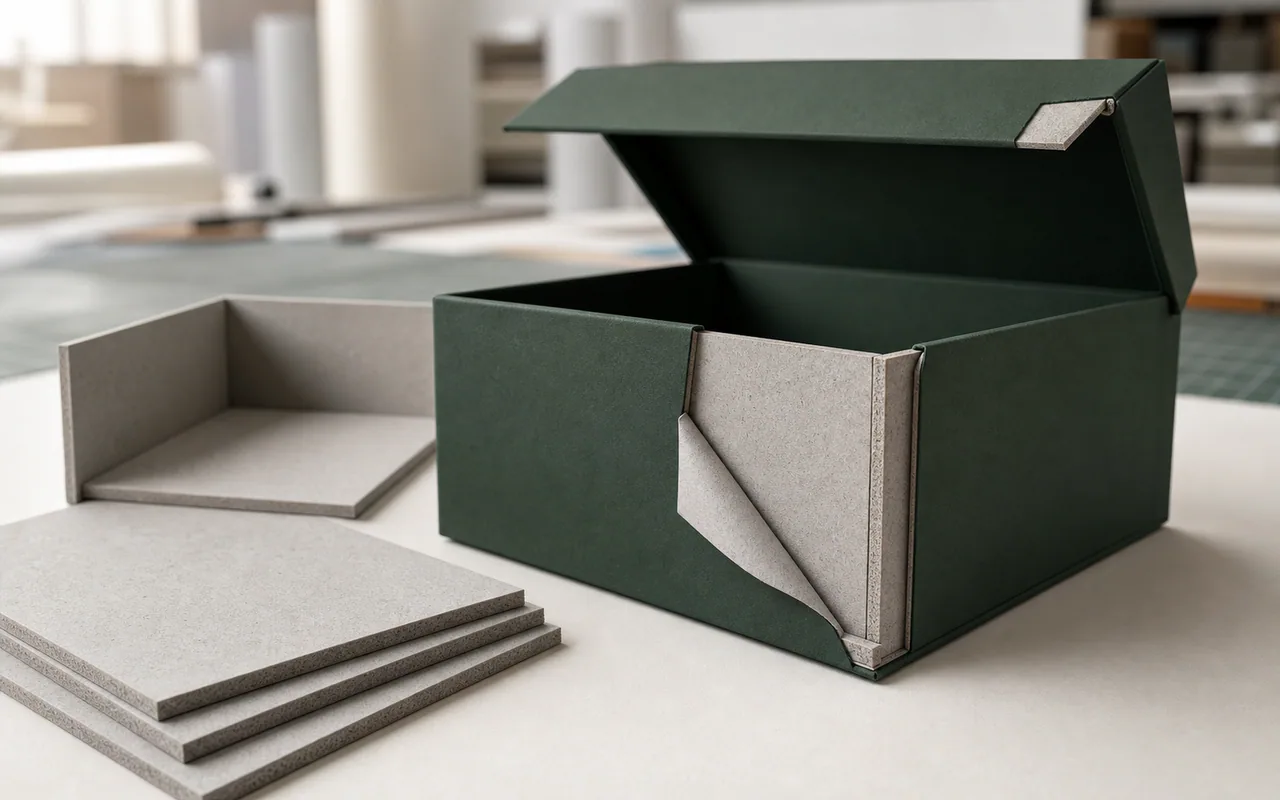
Grey board, also known as grey chipboard, is one of the most widely used paperboard materials in packaging and converting. It is not usually chosen for decorative surface appearance. It is chosen because it gives packaging structure, stiffness and reliable thickness at a practical cost.
For buyers of rigid boxes, hardcover books, puzzles, folders, stationery products and display boards, grey board is often the hidden material that determines whether the finished product feels solid, flat and durable.
What Is Grey Board?
Grey board is a dense paperboard generally made from recycled fiber. It has a natural grey color, a firm hand feel and a smooth uncoated surface. It is usually supplied in sheets and can be laminated, wrapped, die cut, grooved, mounted or covered with printed paper, fancy paper, leatherette paper or other decorative materials.
Unlike folding carton board, grey board is not designed mainly for direct high-color printing. It is used as the structural base beneath an outer wrapping layer. It is the most common structural material for rigid box makers worldwide — browse our full grey board product page for detailed thickness options. This makes it ideal for rigid packaging projects where the final appearance comes from printed paper, specialty paper, fabric, leatherette paper or other surface materials.
Common Applications
Grey board is used in many products where stiffness and flatness matter:
- Rigid gift boxes
- Luxury packaging bases
- Hardcover book covers
- Ring binders and file folders
- Jigsaw puzzles and game boards
- Display boards and mounting boards
- Stationery backing boards
- Cosmetic and electronics packaging structures
In luxury packaging, grey board is commonly wrapped with art paper, black paper, pearlescent paper, embossed paper or printed paper. The buyer sees the premium outer finish, but the grey board provides the strength underneath.
Why Packaging Buyers Choose Grey Board
The main value of grey board is structure. A good grey board helps a finished box stay square, resist warping and feel substantial in the customer’s hand.
Key advantages include:
- High stiffness for rigid boxes and covers
- Stable thickness options
- Cost-effective recycled fiber base
- Good converting performance
- Compatible with lamination, wrapping and die cutting
- Suitable for custom sheet sizes
For many packaging factories, grey board is also easy to process with common converting equipment. It can be cut, pasted, mounted and grooved for box making.
How to Choose the Right Grey Board
Buyers should not select grey board by thickness alone. A board with the same thickness can feel different depending on density, moisture, fiber composition and production control.
When sourcing grey board, check these points:
- Thickness or GSM equivalent
- Sheet size tolerance
- Moisture level
- Flatness and warping control
- Surface smoothness
- Cutting and grooving performance
- Packing method for export
- Certification requirements such as FSC recycled
If the board will be used for premium rigid boxes, ask for samples before confirming a bulk order. Test the board with your actual wrapping paper, glue, cutting method and box structure.
Grey Board vs Duplex Board
Grey board and duplex board are often confused, but they serve different purposes.
Grey board is usually used as an inner structural board for rigid boxes, book covers and mounting. Duplex board has a printable coated white surface and a grey back, making it more suitable for cartons, retail packaging and printed folding boxes.
If your packaging needs direct printing, duplex board or folding box board may be more suitable. If your packaging needs rigid structure under a wrap, grey board is often the better choice.
Export Sourcing Tips
For international buyers, consistent packing and documentation are just as important as the board itself. Ask your supplier about pallet packing, moisture protection, container loading, certificates and lead time.
A reliable grey board supplier should be able to provide:
- Stable thickness and density
- Custom sheet size support
- Export pallet packing
- Clear product specification sheet
- Sample support
- Production and delivery schedule
- Certificates when required
Conclusion
Grey board may not be the most visible part of premium packaging, but it is often the material that gives the package its value. It supports the structure, improves the hand feel and helps the finished product stay strong through production, shipping and use.
For rigid box makers, bookbinders, stationery producers and packaging converters, choosing the right grey board is a practical step toward better quality and more stable production.
FAQ
What is grey board used for?
Grey board is used for rigid boxes, book covers, file folders, puzzles, game boards, display boards and premium packaging structures.
Is grey board printable?
Grey board can be printed in some cases, but it is more commonly used as a structural base and wrapped with printed paper, fancy paper or other surface materials.
What thickness is available for grey board?
Common options range from thin board to heavy board used for rigid packaging. Buyers should confirm thickness, density and sheet size with the supplier.
Is grey board eco-friendly?
Many grey board grades are made from recycled fiber. Buyers can request FSC recycled or other certification depending on market requirements.