
Guides · 2026-07-18
How to Source Paper from China: A Complete Guide for International Packaging Buyers
Sourcing paper from China can reduce costs and expand your supplier base — but only if you know how to specify, qualify, and manage orders correctly. This guide covers the full process from product selection to container loading.
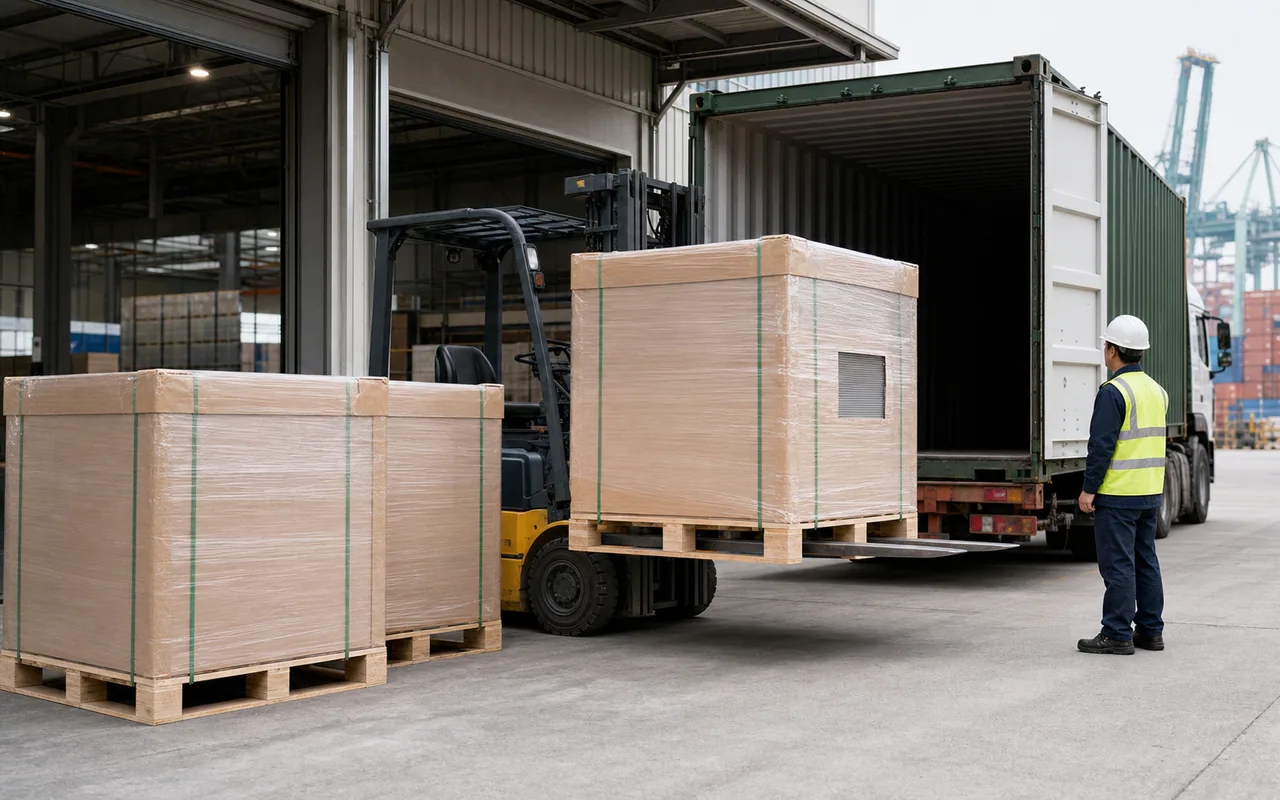
China is the world's largest paper and paperboard producer, exporting over 10 million tons annually to more than 150 countries. For packaging converters, printers, box makers, and industrial buyers, sourcing paper from China offers access to competitive pricing, broad product range, and flexible supply — but only when the process is managed correctly.
This guide covers the full sourcing journey: from defining your specification to receiving the container at your warehouse.
Why Source Paper from China?
International buyers source paper from China for several practical reasons:
- Competitive pricing — Economies of scale, integrated mills, and efficient logistics keep costs competitive.
- Product breadth — From lightweight tissue to heavy structural board, Chinese mills produce virtually every paper grade.
- Flexible order sizes — Many suppliers accept smaller minimum order quantities (MOQ) than Western mills.
- Customization — Custom sheet sizes, reel widths, packing configurations, and private-label programs are widely available.
- Export experience — Established suppliers have container loading, documentation, and international logistics routines in place.
However, sourcing from China also requires careful supplier qualification, clear specification, and disciplined quality management.
Step 1: Define Your Paper Specification Clearly
The most common sourcing mistake is sending an incomplete specification. A vague inquiry such as "I need kraft paper" will generate dozens of unfiltered responses. A precise specification gets you accurate quotes faster.
Essential specification points:
- Product type — Which grade? Example: grey board, CKB, folding box board, woodfree paper, greaseproof paper, etc.
- Grammage (GSM) or thickness (mm/μm) — The basis weight or caliper
- Format — Sheets or reels? If sheets: width × length in mm. If reels: width in mm, maximum diameter, core size
- Quantity — Metric tons or number of sheets/reels per order
- Application — What will the paper be used for? Rigid boxes, folding cartons, printing, bags, food wrapping?
- Printing method — Offset, flexo, digital, screen, hot stamping, or none
- Surface requirements — Coated or uncoated? Gloss, matt, or embossed? One-side or two-side?
- Certification needs — FSC, SGS, ISO, food-contact compliance documents
- Destination port — Required for accurate freight quotation
- Target delivery schedule — Helps the supplier confirm production slot availability
Example of a good inquiry:
> "I need 20 metric tons of grey board, 1.5 mm thickness (±0.1 mm), sheets 787 × 1092 mm, for rigid gift box production. FSC Recycled certification required. Destination: Port of Hamburg, Germany. Target delivery: within 6 weeks."
This level of detail allows a supplier to respond with a firm quotation within hours, not days.
Step 2: Understand the Paper Grades Relevant to Your Project
Different applications require fundamentally different paper types. Here is a practical overview of the main categories:
Structural & Packaging Board
- Grey Board — Recycled structural board for rigid boxes, book covers, puzzles, folders. Also available in laminated variants with white, colored, kraft, black, gold or silver facing papers.
- CKB (Coated Kraft Back) — Multi-coated white top surface with strong unbleached kraft reverse. Ideal for beverage cartons, frozen food packaging, and retail folding cartons.
- Folding Box Board (FBB) — Coated virgin-fibre board with excellent printing and folding performance for cosmetics, pharmaceuticals, and food cartons.
- Duplex Board — Coated white top with grey back for economical printed cartons.
- Black Paper — Through-dyed black paper and card for luxury packaging, hang tags, and stationery.
Printing & Culture Paper
- Woodfree Paper — Uncoated, high-brightness paper for books, notebooks, and commercial printing.
- C2S Art Paper — Two-side coated gloss or matt paper for catalogs, magazines, and premium print.
- LWC Paper — Lightweight coated paper for magazines, catalogs, and high-volume publishing.
- Newsprint — Cost-efficient paper for newspapers, advertising inserts, and mass-circulation printing.
- Copy Paper — Standard office and photocopy paper in multiple formats and packing options.
- Color Offset Paper — Colored uncoated paper for forms, inserts, stationery, and promotional printing.
Fancy & Specialty Paper
- Color Tissue Paper — Lightweight translucent colored tissue for luxury gift wrapping, shoe stuffing, floral arrangements, and retail presentation.
- Soft Touch Paper — Velvet-smooth tactile coated paper for premium boxes, covers, and hangtags.
- Leather Paper — Leather-textured paper for luxury packaging and stationery.
- Pearlescent Paper — Soft shimmer paper for gift packaging, cosmetics, and invitations.
- Embossed Paper — Textured surface paper with raised patterns for decorative packaging.
- Label Paper — Premium face stock for pressure-sensitive labels, hang tags, and wet-glue labels.
- Tracing Paper — Translucent paper for luxury packaging overlays, invitations, and book inserts.
Food & Industrial Packaging Paper
- Cup Paper — Virgin-fibre cupstock board for hot and cold drink cups.
- Greaseproof Paper — Oil-resistant paper for bakery, fast food, and food wrapping.
- MG Paper — Machine-glazed paper with glossy face for wrapping, bags, and flexible packaging.
- PE Coated Paper — Polyethylene-coated paper for moisture barrier and heat-seal applications.
- Kraft Paper — High-strength natural or bleached paper for bags, sacks, and industrial packaging.
Step 3: Qualify Your Supplier
Not all suppliers are equal. Before placing a purchase order, verify:
- Years in business — How long has the supplier been exporting?
- Mill partnerships — Which mills do they work with? YOUNGSUN's supply network includes APP, Sun Paper, Nine Dragons, Liansheng, and Huatai.
- Warehouse capacity — Do they hold stock, or is every order produced to order?
- Export volume — How many containers do they ship per month?
- Certifications — Can they provide valid FSC, SGS, ISO, or other certificates?
- Sample policy — Do they offer free samples?
- References — Can they share references from buyers in your region?
- Communication responsiveness — How quickly and clearly do they respond to technical questions?
A factory visit or third-party inspection is recommended for large or long-term contracts. If you cannot visit in person, request a video call showing the warehouse, loading area, and sample stock.
Step 4: Request and Evaluate Samples
Never skip the sample stage. A specification sheet tells you numbers; a sample tells you how the paper actually performs.
When you receive samples:
- Measure the thickness/GSM against the specification
- Check surface quality — smoothness, coating uniformity, color consistency
- Test with your actual printing, cutting, folding, gluing, or wrapping process
- Evaluate stiffness and rigidity for structural applications
- For food-contact grades, verify odor, cleanliness, and appearance
- Test moisture behavior in your production environment
If the sample performs well, ask the supplier to confirm that production stock will match the sample quality. A written confirmation helps set clear expectations.
Step 5: Understand Pricing and Payment Terms
Paper pricing is usually quoted FOB (Free On Board) or CIF (Cost, Insurance, Freight). Make sure you understand which you are receiving.
- FOB — You pay the supplier for the goods plus local charges. You arrange and pay for ocean freight separately.
- CIF — The supplier includes ocean freight and insurance in the price.
Common payment terms:
- T/T (Telegraphic Transfer) — Usually 30% deposit, 70% against copy of shipping documents or before shipment.
- L/C (Letter of Credit) — Common for larger orders; terms must be clearly agreed in advance.
Ask for a proforma invoice that details:
- Product description and specification
- Quantity and unit price
- Total amount
- Payment terms
- Delivery terms (Incoterms)
- Estimated shipment date
- Port of loading and destination
- Packing details
Step 6: Container Loading and Logistics
Paper is heavy and dense. A 40-foot high-cube (40HQ) container typically holds approximately 25 metric tons of paper, depending on the product density and packing configuration.
Key logistics points:
- Packing method — Ream-wrapped, palletized, bulk-packed, or custom packing?
- Moisture protection — Is the container lined with moisture barrier? Are desiccants included?
- Pallet specifications — Standard or custom pallet size? Are pallets IPPC heat-treated for export?
- Loading plan — Confirm weight distribution and loading sequence with your supplier.
- Documentation — Bill of Lading, Commercial Invoice, Packing List, Certificate of Origin, and any required certificates.
For multi-product containers (e.g., mixed grades or mixed sizes), request a detailed loading list showing the position and quantity of each item.
Step 7: Quality Control and Dispute Prevention
Even with a qualified supplier, quality issues can arise. A few precautions reduce risk significantly:
- Pre-shipment inspection — Hire a third-party inspection company to check quantity, packing, specification, and appearance before the container is sealed.
- Photo documentation — Ask the supplier to send photos of the production lot, packing process, and loaded container.
- Retain samples — Keep the original approved sample and the pre-shipment sample for comparison.
- Written confirmation — Confirm all specifications, tolerances, and packing requirements in writing, not just in conversation.
Common quality issues to watch for:
- GSM or thickness out of tolerance
- Poor sheet cutting accuracy (±3 mm or more)
- Surface scratches, dirt, or coating defects
- Moisture content too high, causing warping
- Color variation between batches
- Insufficient packing leading to transport damage
The Sourcing Checklist
Before you send an inquiry, confirm you can answer these questions:
- Product grade and GSM/thickness — confirmed?
- Sheet size or reel width — confirmed?
- Quantity in metric tons — confirmed?
- Application and printing method — confirmed?
- Certification requirements — confirmed?
- Packing requirements — confirmed?
- Destination port — confirmed?
- Target delivery date — confirmed?
- Budget range — confirmed?
- Sample requirement — confirmed?
The more complete your inquiry, the faster and more accurate the quotation you will receive.
Common Mistakes to Avoid
- Comparing price without comparing specification — Two quotes for "grey board 1.5 mm" can refer to completely different density, moisture, and flatness.
- Skipping samples — The cost of a bad container far exceeds the time spent testing samples.
- Not confirming packing — A container of paper that arrives wet or damaged is a total loss.
- Rushing without documentation — Missing certificates can delay customs clearance and cost storage fees.
- No quality inspection — A third-party inspection costs a few hundred dollars but can save tens of thousands.
Conclusion
Sourcing paper from China is a proven strategy for packaging converters, printers, and industrial buyers worldwide. The key to success is preparation: define your specification precisely, qualify your supplier carefully, test samples thoroughly, agree on packing and documentation, and maintain clear communication throughout the process.
A good supplier relationship is built on clear expectations, consistent quality, and reliable delivery. When those three elements are in place, sourcing from China becomes a long-term competitive advantage.
FAQ
What is the minimum order quantity for paper from China?
Many suppliers accept MOQs as low as 1 metric ton, though pricing improves with larger volumes. Container-load orders (20–25 tons) offer the best freight efficiency.
How long does it take to receive paper from China?
Production lead time is typically 2–3 weeks. Ocean freight to Europe takes approximately 30–40 days, to North America 15–25 days, and to the Middle East 15–20 days. Total timeline from order to delivery: approximately 6–9 weeks.
Which certifications should I request?
FSC certification is the most commonly requested. For food-contact applications, additional compliance documents apply. SGS test reports and ISO 9001/14001 certificates are also common.
Can I get custom sheet sizes?
Yes. Most suppliers offer custom cutting to buyer specifications. Confirm cutting tolerance (±1 mm or ±2 mm) before ordering.
How do I pay for paper orders from China?
The most common method is T/T (30% deposit, 70% before shipment or against copy of documents). Letters of Credit are also used for larger orders.
Related Products and Guides
- All Products & Categories
- Grey Board — rigid box structural base
- CKB (Coated Kraft Back) — beverage & frozen food packaging
- Folding Box Board — retail carton board
- Kraft Paper — bags, sacks & wrapping
- Color Tissue Paper — luxury gift wrapping tissue
- Newsprint — newspaper & publishing paper
- MG Paper — machine-glazed wrapping paper